
5 Key Takeaways
- Sales is right to be opinionated. Here is what a good process gives you, and what to escalate when it does not.
- A good territory-design process gives you clear timing, understandable methodology, comparable standards, account-level results, manager context, stable go-live mechanics, and paths for corrections, questions, and exceptions.
- Expect answers to seven questions: what changed, why, how your book was built, how equity was handled, what to focus on, when it goes live, and where each kind of problem should go.
- You should have voice and evidence without receiving a veto over the whole model; leadership should retain decision authority while showing the tradeoffs and responding through a consistent process.
- The process fails when reps receive spin, no account-level report, an offline CRM, or one generic inbox that mixes factual corrections, policy questions, exception requests, and escalation.
Your territory shapes your accounts, workload, pipeline, customer relationships, quota, earnings, and opportunity to advance. Sales is right to be opinionated. Here is what a good process gives you, and what to escalate when it does not. This guide shows what you should check, what evidence to request, and which questions to bring to your manager. You can use them without becoming the territory designer yourself.
BoogieBoard treats seller expectations for territory design as part of a governed change process. The model must connect market strategy with account-level evidence, productive capacity, explicit decision rights, and controlled activation. The objective is not to remove judgment. It is to make judgment visible and repeatable.
The central position is: Sales is right to be opinionated; their livelihood depends on it. The sections below turn that position into definitions, alternatives, procedures, examples, controls, and an operating decision.
Working Definitions
- Rules of Engagement: published rules for ownership, collaboration, credit, exceptions, and escalation across roles.
- Balance Goal: a measurable objective for healthy opportunity, quality, workload, or continuity.
- Territory Health: the measured condition of a complete territory against its published goals.
- holdover: a temporary, approved continuation of responsibility after the future territory changes.
- rep feedback loop: the published path for seller evidence, corrections, policy questions, and exception requests.
BoogieBoard has observed 1,000-plus-rep planning cycles involving 8 to 20 Operations stakeholders and 80 to 120 Sales-leader stakeholders. The process is a governed change program, not a private analyst exercise. For seller expectations for territory design, use that observation only for the claim and population it directly supports.
Independent evidence provides a separate check for seller expectations for territory design: Grant, Cravens, Low, and Moncrief link satisfaction with territory design to role clarity, motivation, job attitudes, and performance outcomes.
Core Components: Seller Expectations For Territory Design
A good territory-design process gives you clear timing, understandable methodology, comparable standards, account-level results, manager context, stable go-live mechanics, and paths for corrections, questions, and exceptions. Document inputs and outputs separately. Inputs include account attributes, hierarchy, current assignments, opportunities, customer obligations, capacity, and quota. Outputs include the territory roster, summary health measures, account-level changes, exception records, and activation instructions. That separation lets reviewers challenge an assumption without rebuilding the entire design. In seller expectations for territory design, test the choice against Balance Goal, then record any accepted exception in the decision log. You should be able to trace the result from your account roster to the published rule.
The Decision Rule
The process fails when reps receive spin, no account-level report, an offline CRM, or one generic inbox that mixes factual corrections, policy questions, exception requests, and escalation. Use this module to make the hidden decision explicit. State the role, population, evidence, rule, exception path, and operating consequence. The objective is not a perfectly clean model; it is a model whose compromises are visible enough to approve, communicate, and improve. The seller expectations for territory design review is complete only when Territory Health and the affected account roster tell the same story. If your territory is an outlier, ask whether the difference is intentional, temporary, or a data error.
The Evidence Standard
You should have voice and evidence without receiving a veto over the whole model; leadership should retain decision authority while showing the tradeoffs and responding through a consistent process. A practical test is to pick one surprising account and trace it end to end. Explain why it is in the segment, why it belongs in the territory, whether it is locked, which goals it affects, and what happens when the seller changes. If the answer requires several private spreadsheets, the model is not yet governed. Use one current-state baseline to keep every seller expectations for territory design scenario comparable. Your manager should be able to explain the tradeoff without relying on a private spreadsheet.
The Population Test
For The Population Test, make the implicit policy inspectable at account level. Use rep feedback loop to confirm that the prior state, rationale, communication, effective date, and operating result agree. You should see the effect on your accounts and know where to challenge an error.
The Account-Level Test
For The Account-Level Test, make the implicit policy inspectable at account level. Use Rules of Engagement to confirm that the prior state, rationale, communication, effective date, and operating result agree. You should see the effect on your accounts and know where to challenge an error.
Common Models and Variations: Seller Expectations For Territory Design
The model in this subsection is useful only when its organizing rule matches the selling motion. Compare options by opportunity, workload, continuity, explainability, and maintenance burden. A structure that looks simple at launch can create expensive exceptions when accounts change segment, sellers leave, or related companies need coordinated coverage. Give the seller expectations for territory design decision a source date, an owner, and a condition that would trigger revision. Ask what evidence would cause leadership to revisit your territory after activation.
The Role Test
For The Role Test, make the implicit policy inspectable at account level. Use Territory Health to confirm that the prior state, rationale, communication, effective date, and operating result agree. You should see the effect on your accounts and know where to challenge an error.
The Workload Test
For The Workload Test, make the implicit policy inspectable at account level. Use holdover to confirm that the prior state, rationale, communication, effective date, and operating result agree. You should see the effect on your accounts and know where to challenge an error.
The Continuity Test
For The Continuity Test, make the implicit policy inspectable at account level. Use rep feedback loop to confirm that the prior state, rationale, communication, effective date, and operating result agree. You should see the effect on your accounts and know where to challenge an error.
The Approval Test
For The Approval Test, make the implicit policy inspectable at account level. Use Rules of Engagement to confirm that the prior state, rationale, communication, effective date, and operating result agree. You should see the effect on your accounts and know where to challenge an error.
The Activation Test
For The Activation Test, make the implicit policy inspectable at account level. Use Balance Goal to confirm that the prior state, rationale, communication, effective date, and operating result agree. You should see the effect on your accounts and know where to challenge an error.
The Exception Test
For The Exception Test, make the implicit policy inspectable at account level. Use Territory Health to confirm that the prior state, rationale, communication, effective date, and operating result agree. You should see the effect on your accounts and know where to challenge an error.
See Balance in the Planning Workflow
The relevant product workflow is Even Out Quotas and Workload. BoogieBoard Scenario Planning keeps the account-level assumptions, tradeoffs, and proposed assignments visible while the team completes that work.
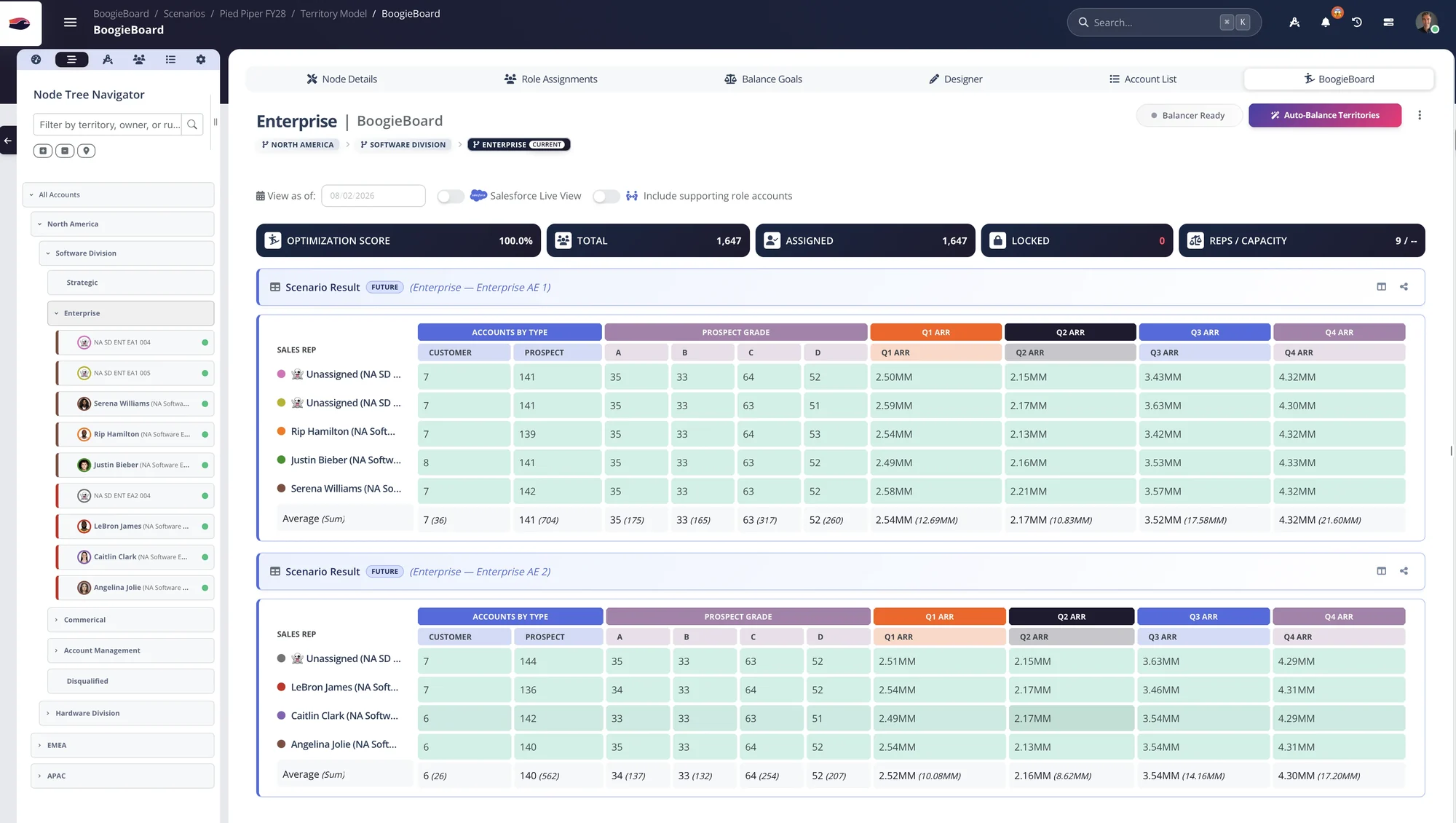
Scenario Results show customer and prospect mix, prospect grade, quarterly ARR, account locks, and rep capacity in one review surface.
The Correction Test
For The Correction Test, make the implicit policy inspectable at account level. Use holdover to confirm that the prior state, rationale, communication, effective date, and operating result agree. You should see the effect on your accounts and know where to challenge an error.
The Role-Specific Model
For The Role-Specific Model, compare the alternatives against one population and source date. Use rep feedback loop to confirm that the prior state, rationale, communication, effective date, and operating result agree. You should see the effect on your accounts and know where to challenge an error.
How to Measure the Result: Seller Expectations For Territory Design
When one account appears in the wrong segment, you should submit a data correction with the account ID; when the published rule itself seems wrong, you should use the policy challenge path rather than a private trade. Use both current-state and future-state views. Report account movement, locked accounts, unassigned records, family splits, vacancies, and quota differences beside Territory Health. Monitor outcomes later, but avoid claiming that attainment alone proves the design was correct; product, market, timing, execution, and quota also affect performance. Before activating seller expectations for territory design, show managers the effect on Territory Health and every downstream rule that depends on it. Your review should focus on documented facts and rules, not a negotiation for preferred accounts.
Inputs and Assumptions 2: Seller Expectations For Territory Design
Use this module to make the hidden decision explicit. State the role, population, evidence, rule, exception path, and operating consequence. The objective is not a perfectly clean model; it is a model whose compromises are visible enough to approve, communicate, and improve. For seller expectations for territory design, document the effect on Rules of Engagement before the model advances. For your book, ask which accounts move and which measure justifies the change.
The Coverage Objective
Expect answers to seven questions: what changed, why, how your book was built, how equity was handled, what to focus on, when it goes live, and where each kind of problem should go. Start with coverage before fairness. Define which market the company intends to serve, which roles cover it, and how much productive capacity exists. Only then can the team judge whether the resulting territories distribute opportunity and workload in a defensible way. In seller expectations for territory design, test the choice against Balance Goal, then record any accepted exception in the decision log. You should be able to trace the result from your account roster to the published rule.
The Decision Rule: Further Application 2
For The Decision Rule: Further Application 2, make the implicit policy inspectable at account level. Use holdover to confirm that the prior state, rationale, communication, effective date, and operating result agree. You should see the effect on your accounts and know where to challenge an error.
The Customer-Continuity Model
For The Customer-Continuity Model, compare the alternatives against one population and source date. Use rep feedback loop to confirm that the prior state, rationale, communication, effective date, and operating result agree. You should see the effect on your accounts and know where to challenge an error.
Comparable Role Distribution
For Comparable Role Distribution, report both the summary result and affected account roster. Use Rules of Engagement to confirm that the prior state, rationale, communication, effective date, and operating result agree. You should see the effect on your accounts and know where to challenge an error.
The Evidence Standard: Further Application 2
For The Evidence Standard: Further Application 2, make the implicit policy inspectable at account level. Use Balance Goal to confirm that the prior state, rationale, communication, effective date, and operating result agree. You should see the effect on your accounts and know where to challenge an error.
Systems and Tooling: Seller Expectations For Territory Design
Technology should preserve the model, not only the final owner field. Test version control, current-to-future comparison, account-level inspection, locks, scenario assumptions, approvals, effective dates, CRM deployment, and audit history. A faster spreadsheet export is not the same as a governed planning system. Give the seller expectations for territory design decision a source date, an owner, and a condition that would trigger revision. Ask what evidence would cause leadership to revisit your territory after activation.
Decision Worksheet
| Decision | Evidence to inspect | Control |
|---|---|---|
| Explain the change | Rules of Engagement and business rationale | Approved narrative |
| Show the impact | Balance Goal and Territory Health | Manager and seller reports |
| Prepare go-live | CRM, policies, temporary rules, and support paths | Effective date and named owners |
| Close the transition | Corrections, exceptions, expirations, and unresolved commitments | Reconciliation checkpoint |
What This Means for You
You do not need to rebuild the model to evaluate seller expectations for territory design. Check whether your accounts match the published population, whether your workload and opportunity are measured with understandable inputs, whether locked accounts remain in the final comparison, and whether your quota reflects material territory differences. Bring account IDs and evidence when you find an error.
Questions to Ask Your Manager
- What business objective drove this decision, and what tradeoff did leadership accept?
- Which rules determine the accounts and customers in my territory?
- Which Balance Goals were used, and what range is considered acceptable?
- Which accounts were locked, and are they included in the final Territory Health result?
- How does my quota account for potential, workload, capacity, and ramp?
- Where do I submit a data correction or policy challenge, and when will I receive an answer?
Frequently Asked Questions
What should reps expect during territory planning?
A good territory-design process gives you clear timing, understandable methodology, comparable standards, account-level results, manager context, stable go-live mechanics, and paths for corrections, questions, and exceptions. You should have voice and evidence without receiving a veto over the whole model; leadership should retain decision authority while showing the tradeoffs and responding through a consistent process. Use the published definitions and complete-territory result instead of relying on one universal benchmark. Ask your manager to show how that standard applies to your book.
When should a rep escalate a territory issue?
Expect answers to seven questions: what changed, why, how your book was built, how equity was handled, what to focus on, when it goes live, and where each kind of problem should go. When one account appears in the wrong segment, you should submit a data correction with the account ID; when the published rule itself seems wrong, you should use the policy challenge path rather than a private trade. Publish the assumptions so another reviewer can reproduce the answer. You should be able to reproduce the answer from your roster and the stated inputs.
What evidence is required for seller expectations for territory design?
For seller expectations for territory design, assemble governed account data, current assignments, role capacity, and decision evidence for Rules of Engagement, Balance Goal, and Territory Health. Date the sources and publish the definitions so another reviewer can reproduce the result and separate a factual correction from a policy exception. Request the source date when the underlying account facts look stale.
How often should seller expectations for territory design be reviewed?
Review seller expectations for territory design on the formal planning cadence and whenever the inputs behind Rules of Engagement, Balance Goal, and Territory Health change materially. Keep customer and pipeline ownership stable between reviews; reopen the model when strategy or new evidence changes the decision, not merely because a manager prefers a different assignment. Ask when your territory will next receive a formal review.
How should data corrections and policy exceptions be separated?
Disputes about seller expectations for territory design should send incorrect account facts through the data-correction path and challenges to the published rule through policy governance. Any exception needs a reason, approver, effective period, and visible effect on the complete approved model. Check that your locked accounts remain in the final health calculation.
What must be ready before a territory change goes live?
A change involving seller expectations for territory design can go live only after the manager briefing, account-level report, published policy, CRM assignment, temporary coverage, support path, and effective date agree. Reconcile the live result after activation so the announcement and operating record cannot drift apart. You need a system when manual reconciliation makes the rule impossible to inspect.
About the author: Tyler Thompson is Co-Founder & CTO of BoogieBoard.
In Summary
Sales is right to be opinionated. Here is what a good process gives you, and what to escalate when it does not. Use the sequence above to keep the decision governed, evidence-based, and inspectable at both the account and territory levels.
See Territory Planning in Practice
Watch practical territory-design workflows on the BoogieBoard YouTube channel.