5 Key Takeaways
- If your account data lives in a warehouse and your ownership lives in Salesforce, the planning layer has to reconcile both without becoming a third source of truth.
- The warehouse can enrich account facts and Salesforce can operate ownership, but a governed planning layer must reconcile both through stable account identifiers without becoming a third golden record.
- Map each required field to an accountable source, join warehouse and Salesforce records through Provider ID or another stable external ID, preserve the live model as a Current State Scenario, model the future state, approve account-level differences, and sync only the approved assignments.
- Best-of-breed data and planning tools add integration governance, but that burden is preferable to asking Salesforce, a warehouse, and a spreadsheet to maintain three conflicting versions of account ownership.
- The model fails when custom ownership fields encode temporary people instead of durable territories and roles, because vacancies, overlays, future states, forecasting, and audit history become disconnected.
If your account data lives in a warehouse and your ownership lives in Salesforce, the planning layer has to reconcile both without becoming a third source of truth. That position is useful only when the planning team can translate it into inputs, decisions, controls, and a result the field can understand.
BoogieBoard treats territory planning across Salesforce and Snowflake as part of a governed change process. The model must connect market strategy with account-level evidence, productive capacity, explicit decision rights, and controlled activation. The objective is not to remove judgment. It is to make judgment visible and repeatable.
The central position is: Custom ownership fields are an anti-pattern. The sections below turn that position into definitions, alternatives, procedures, examples, controls, and an operating decision.
Working Definitions
- owner-centric model: a coverage model in which the person in the owner field functions as the territory.
- territory-based model: a coverage model in which the territory persists while people rotate through assigned roles.
- golden record: the governed account record whose identifiers and approved attributes anchor downstream planning.
- Salesforce Sync: the controlled exchange of approved territory structure and assignments with Salesforce.
- Provider ID: a stable external identifier used to reconcile one account across source systems.
BoogieBoard's first-party corpus grounds this recommendation in observed territory designs and named practitioner evidence. Treat the observation as a planning input and test it against your own market, roles, and data. For territory planning across salesforce and snowflake, use that observation only for the claim and population it directly supports.
Independent evidence provides a separate check for territory planning across salesforce and snowflake: Salesforce documents a Snowflake connector that brings warehouse data into Salesforce Data Pipelines through a governed remote connection.
Why the Decision Matters: Territory Planning Across Salesforce And Snowflake
Best-of-breed data and planning tools add integration governance, but that burden is preferable to asking Salesforce, a warehouse, and a spreadsheet to maintain three conflicting versions of account ownership. The business consequence is clearest when a company cannot separate execution from starting conditions. If opportunity and workload are invisible, attainment becomes an ambiguous signal. A measured territory does not explain every result, but it gives leadership a defensible denominator for capacity, quota, and performance conversations. In territory planning across Salesforce and Snowflake, test the choice against territory-based model, then record any accepted exception in the decision log.
A Practical Decision Lens: Territory Planning Across Salesforce And Snowflake
The model fails when custom ownership fields encode temporary people instead of durable territories and roles, because vacancies, overlays, future states, forecasting, and audit history become disconnected. Use this module to make the hidden decision explicit. State the role, population, evidence, rule, exception path, and operating consequence. The objective is not a perfectly clean model; it is a model whose compromises are visible enough to approve, communicate, and improve. The territory planning across Salesforce and Snowflake review is complete only when golden record and the affected account roster tell the same story.
Systems and Tooling: Territory Planning Across Salesforce And Snowflake
Map each required field to an accountable source, join warehouse and Salesforce records through Provider ID or another stable external ID, preserve the live model as a Current State Scenario, model the future state, approve account-level differences, and sync only the approved assignments. Evaluate the operating path, not a feature checklist. Ask who can change logic, how managers inspect impact, what happens to exceptions, and how approved records reach Salesforce. No-code should shorten controlled iteration without removing decision rights or auditability. Use one current-state baseline to keep every territory planning across Salesforce and Snowflake scenario comparable.
territory-based model: The Decision Test
For territory-based model: The Decision Test, make the implicit policy inspectable at account level. Use Provider ID to test whether the live state, future scenario, and approved Salesforce result remain consistent; record exceptions instead of hiding them in a person field.
owner-centric model: The Decision Test
For owner-centric model: The Decision Test, assign decision rights, review cadence, and correction path. Use owner-centric model to test whether the live state, future scenario, and approved Salesforce result remain consistent; record exceptions instead of hiding them in a person field.
owner-centric model: The Decision Test: Review 6
The warehouse can enrich account facts and Salesforce can operate ownership, but a governed planning layer must reconcile both through stable account identifiers without becoming a third golden record. The model in this subsection is useful only when its organizing rule matches the selling motion. Compare options by opportunity, workload, continuity, explainability, and maintenance burden. A structure that looks simple at launch can create expensive exceptions when accounts change segment, sellers leave, or related companies need coordinated coverage. Give the territory planning across Salesforce and Snowflake decision a source date, an owner, and a condition that would trigger revision.
territory-based model: The Decision Test: Review 7
For territory-based model: The Decision Test: Review 7, trace the change from source data through Salesforce activation. Use golden record to test whether the live state, future scenario, and approved Salesforce result remain consistent; record exceptions instead of hiding them in a person field.
golden record: The Decision Test
For golden record: The Decision Test, make the implicit policy inspectable at account level. Use Salesforce Sync to test whether the live state, future scenario, and approved Salesforce result remain consistent; record exceptions instead of hiding them in a person field.
See Salesforce Sync in the Planning Workflow
The relevant product workflow is Reconcile BoogieBoard and Salesforce Territories. BoogieBoard Scenario Planning keeps the account-level assumptions, tradeoffs, and proposed assignments visible while the team completes that work.
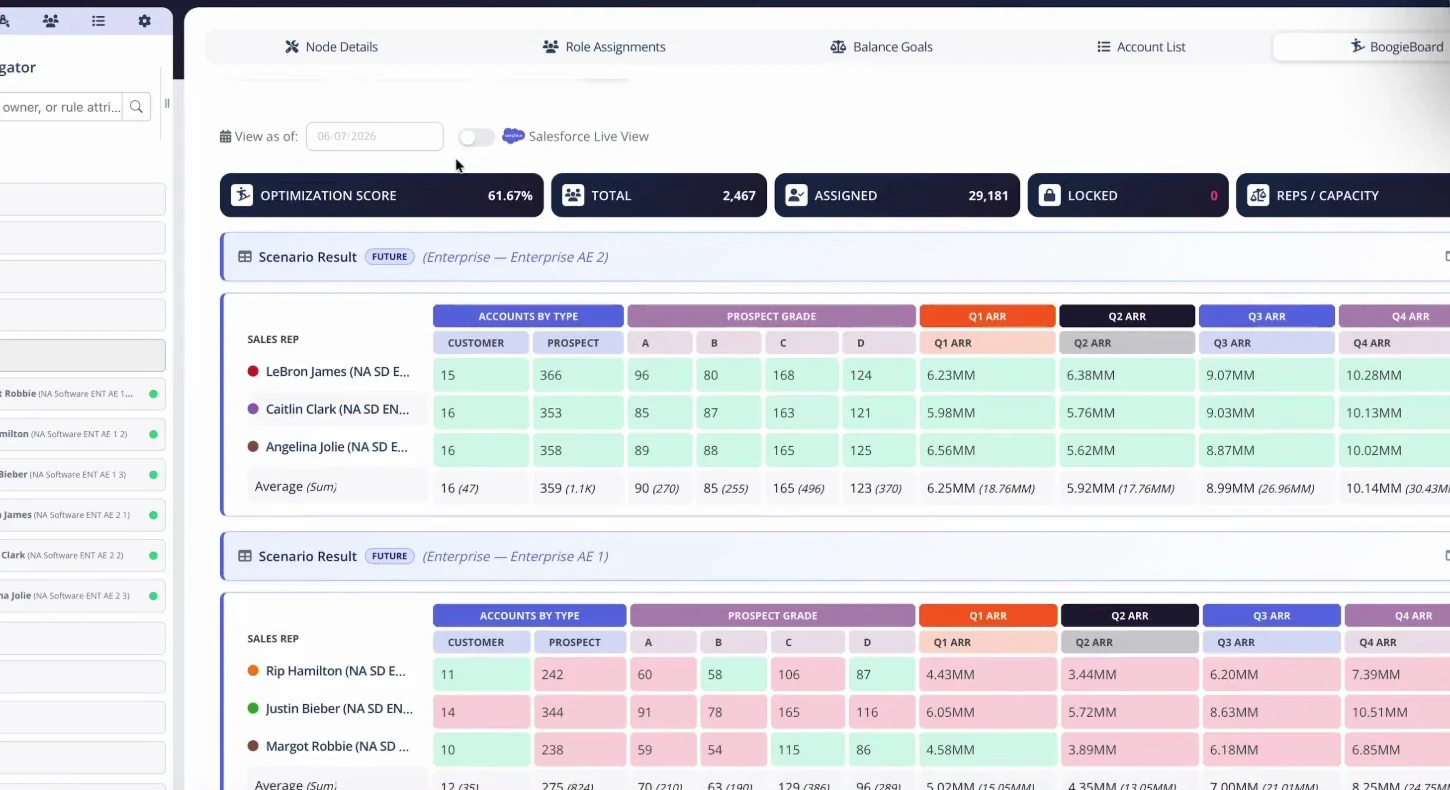
The reconciliation workflow compares selected BoogieBoard assignments with the current Salesforce account state.
Policy and Governance: Territory Planning Across Salesforce And Snowflake
A practical test is to pick one surprising account and trace it end to end. Explain why it is in the segment, why it belongs in the territory, whether it is locked, which goals it affects, and what happens when the seller changes. If the answer requires several private spreadsheets, the model is not yet governed. In territory planning across Salesforce and Snowflake, test the choice against territory-based model, then record any accepted exception in the decision log.
How the Alternatives Differ: Territory Planning Across Salesforce And Snowflake
Compare alternatives against the same population and definitions. One option may improve owner-centric model, another may protect territory-based model, and a third may reduce disruption. Do not let each option use a different denominator or source date; that turns scenario review into a presentation contest. The territory planning across Salesforce and Snowflake review is complete only when golden record and the affected account roster tell the same story.
Decision Note: Provider ID
For Decision Note: Provider ID, make the implicit policy inspectable at account level. Use territory-based model to test whether the live state, future scenario, and approved Salesforce result remain consistent; record exceptions instead of hiding them in a person field.
owner-centric model: The Decision Test 2
For owner-centric model: The Decision Test 2, make the implicit policy inspectable at account level. Use golden record to test whether the live state, future scenario, and approved Salesforce result remain consistent; record exceptions instead of hiding them in a person field.
owner-centric model: The Decision Test: Review 13
For owner-centric model: The Decision Test: Review 13, identify the hidden assumption and the control that exposes it. Use Salesforce Sync to test whether the live state, future scenario, and approved Salesforce result remain consistent; record exceptions instead of hiding them in a person field.
How to Put Territory Planning Across Salesforce And Snowflake Into Practice
If Snowflake classifies an account as enterprise while Salesforce still shows the former employee count and owner, the team should reconcile the identifier and governed attributes before it decides the territory; it should not create another custom owner field to bypass the conflict. How to Put Territory Planning Across Salesforce And Snowflake Into Practice should produce one inspectable Salesforce decision before the process advances. Preserve the live state, validate identifiers and roles, model the proposed state, review account-level changes, record approval, and activate on a defined date. A late exception should not silently rewrite the rule or the baseline. Give the territory planning across Salesforce and Snowflake decision a source date, an owner, and a condition that would trigger revision.
Decision Worksheet
| Decision | Evidence to inspect | Control |
|---|---|---|
| Define the population | owner-centric model and comparable roles | Named data owner |
| Measure the current state | territory-based model and golden record | Source date and baseline |
| Choose the tradeoff | Scenario comparison and complete Territory Health | Recorded approver |
| Activate the result | Account roster, changes, quota, and transition rules | Effective date and correction path |
Source of Truth and Identity Controls
Create a field-level source map for territory planning across salesforce and snowflake. Name the authoritative system for account identity, hierarchy, segment, owner, territory, role, opportunity, and customer obligation. Reconcile records with a stable external ID, flag unmatched accounts, and prevent a local spreadsheet or custom person field from quietly becoming another golden record. Use owner-centric model as the account-level test for this control.
Current-to-Future Scenario Test
Preserve the live Salesforce configuration as a dated Current State Scenario before evaluating territory planning across salesforce and snowflake. Build the proposed model separately, compare every changed account and role, and keep rejected alternatives available. Reviewers should see both the summary tradeoff and the exact records behind it. For territory-based model, record the assumption that would cause the future state to change.
Approval and Exception Review
Classify feedback on territory planning across salesforce and snowflake as a data correction, policy exception, or preference. Corrections update governed evidence; exceptions require a reason, owner, and expiry or review condition; preferences remain visible without silently changing the model. Name one Approver and use golden record to show which evidence that person considered.
Salesforce Activation Checklist
Turn the approved territory planning across salesforce and snowflake scenario into a deployment package containing territory and role changes, account identifiers, effective dates, exceptions, and rollback instructions. Sync only approved records, capture failures, and compare the activated Salesforce state with the package. Close the change only when Salesforce Sync and the affected account roster reconcile.
Monitoring and Change Triggers
Monitor territory planning across salesforce and snowflake through defined triggers: unmatched or unassigned accounts, role vacancies, stale source data, expired exceptions, failed syncs, and material differences between the approved and live states. Use Provider ID to decide whether the event is routine maintenance or evidence that the model itself needs redesign.
Account-Level Reconciliation
Select a sample of changed, unchanged, locked, customer, prospect, parent, and subsidiary accounts from territory planning across salesforce and snowflake. Trace each record from governed source data through the scenario, approval, and Salesforce result. Investigate any case where owner-centric model, the role assignment, and the documented reason do not tell the same story.
Source of Truth and Identity Controls: Extended Review 2
Create a field-level source map for territory planning across salesforce and snowflake. Name the authoritative system for account identity, hierarchy, segment, owner, territory, role, opportunity, and customer obligation. Reconcile records with a stable external ID, flag unmatched accounts, and prevent a local spreadsheet or custom person field from quietly becoming another golden record. Use territory-based model as the account-level test for this control.
Current-to-Future Scenario Test: Extended Review 2
Preserve the live Salesforce configuration as a dated Current State Scenario before evaluating territory planning across salesforce and snowflake. Build the proposed model separately, compare every changed account and role, and keep rejected alternatives available. Reviewers should see both the summary tradeoff and the exact records behind it. For golden record, record the assumption that would cause the future state to change.
Frequently Asked Questions
Can you plan territories from a data warehouse?
The warehouse can enrich account facts and Salesforce can operate ownership, but a governed planning layer must reconcile both through stable account identifiers without becoming a third golden record. Best-of-breed data and planning tools add integration governance, but that burden is preferable to asking Salesforce, a warehouse, and a spreadsheet to maintain three conflicting versions of account ownership. Use the published definitions and complete-territory result instead of relying on one universal benchmark.
Should Salesforce stay the system of record?
Map each required field to an accountable source, join warehouse and Salesforce records through Provider ID or another stable external ID, preserve the live model as a Current State Scenario, model the future state, approve account-level differences, and sync only the approved assignments. If Snowflake classifies an account as enterprise while Salesforce still shows the former employee count and owner, the team should reconcile the identifier and governed attributes before it decides the territory; it should not create another custom owner field to bypass the conflict. Publish the assumptions so another reviewer can reproduce the answer.
What data is required for territory planning across salesforce and snowflake?
For territory planning across Salesforce and snowflake, assemble governed account data, current assignments, role capacity, and decision evidence for owner-centric model, territory-based model, and golden record. Date the sources and publish the definitions so another reviewer can reproduce the result and separate a factual correction from a policy exception.
How often should territory planning across salesforce and snowflake be reviewed?
Review territory planning across Salesforce and snowflake on the formal planning cadence and whenever the inputs behind owner-centric model, territory-based model, and golden record change materially. Keep customer and pipeline ownership stable between reviews; reopen the model when strategy or new evidence changes the decision, not merely because a manager prefers a different assignment.
How should Salesforce and the planning layer divide responsibility?
For territory planning across Salesforce and snowflake, keep the governed source data behind owner-centric model, territory-based model, and golden record in its approved system, compare current and future states in the planning layer, and operate only approved assignments in Salesforce. Stable identifiers, field ownership, and a dated sync prevent competing records of truth.
How should territory changes be tested before activation?
Changes to territory planning across Salesforce and snowflake should be tested by freezing the live Salesforce state, validating the inputs behind owner-centric model, territory-based model, and golden record, modeling the proposed future scenario, inspecting account-level differences and exceptions, and recording approval. Activate on a defined date and reconcile the deployed result to the approved scenario.
About the author: Kevin Davis is Co-Founder & CEO of BoogieBoard.
In Summary
If your account data lives in a warehouse and your ownership lives in Salesforce, the planning layer has to reconcile both without becoming a third source of truth. Use the sequence above to keep the decision governed, evidence-based, and inspectable at both the account and territory levels.
See Territory Planning in Practice
Watch practical territory-design workflows on the BoogieBoard YouTube channel.