


Skip to content
  1. Home
  2. Customer stories
  3. Challenger
Customer story

How Challenger carved its territories in about 48 hours

Challenger needed new ideal customer profiles, a reprioritized market and a new territory model — in two months, before the new year. Rev found the accounts. BoogieBoard divided them fairly. Sellers started the year with focused, balanced books.

Read the story
Challenger with Rev Sales training
~48 hrs

to carve the new territories in BoogieBoard

2 months

from kickoff to deployed territories, new ICPs included

1,200

net-new ideal-fit accounts found by Rev and shared out evenly

~300

accounts per rep: half SMB, half enterprise

At a glance

Company
Challenger Inc: global sales training and consulting firm, known for the bestselling book The Challenger Sale
Team
Revenue operations led by Alli Manning, then VP of RevOps (now COO), working with partner Rev
Challenge
State-based territories complicated lead routing, drove inequities and left top accounts uncovered
The challenge

An enormous blue ocean, and no clear way through it

In May 2022, Alli Manning joined Challenger Inc as Vice President of Revenue Operations (she's now the COO). Challenger is a global leader in sales training and consultation, owned by private equity firm Marlin Equity Partners and best known for its bestselling book, The Challenger Sale.

Growth meant taking on new products, a bigger team and changing market conditions all at once. For Alli's team, that meant reprioritizing accounts and redefining Challenger's territory model in a two-month window, while keeping sellers happy.

The market was both the opportunity and the risk. “Almost anyone can consume Challenger. That leaves us an enormously large blue ocean,” said Alli. But not every account was worth chasing: “Just because you can get a deal doesn't always mean you should, especially as it relates to our kind of goals.” Reps needed clear direction on which accounts to work.

And the territory model itself was getting in the way.
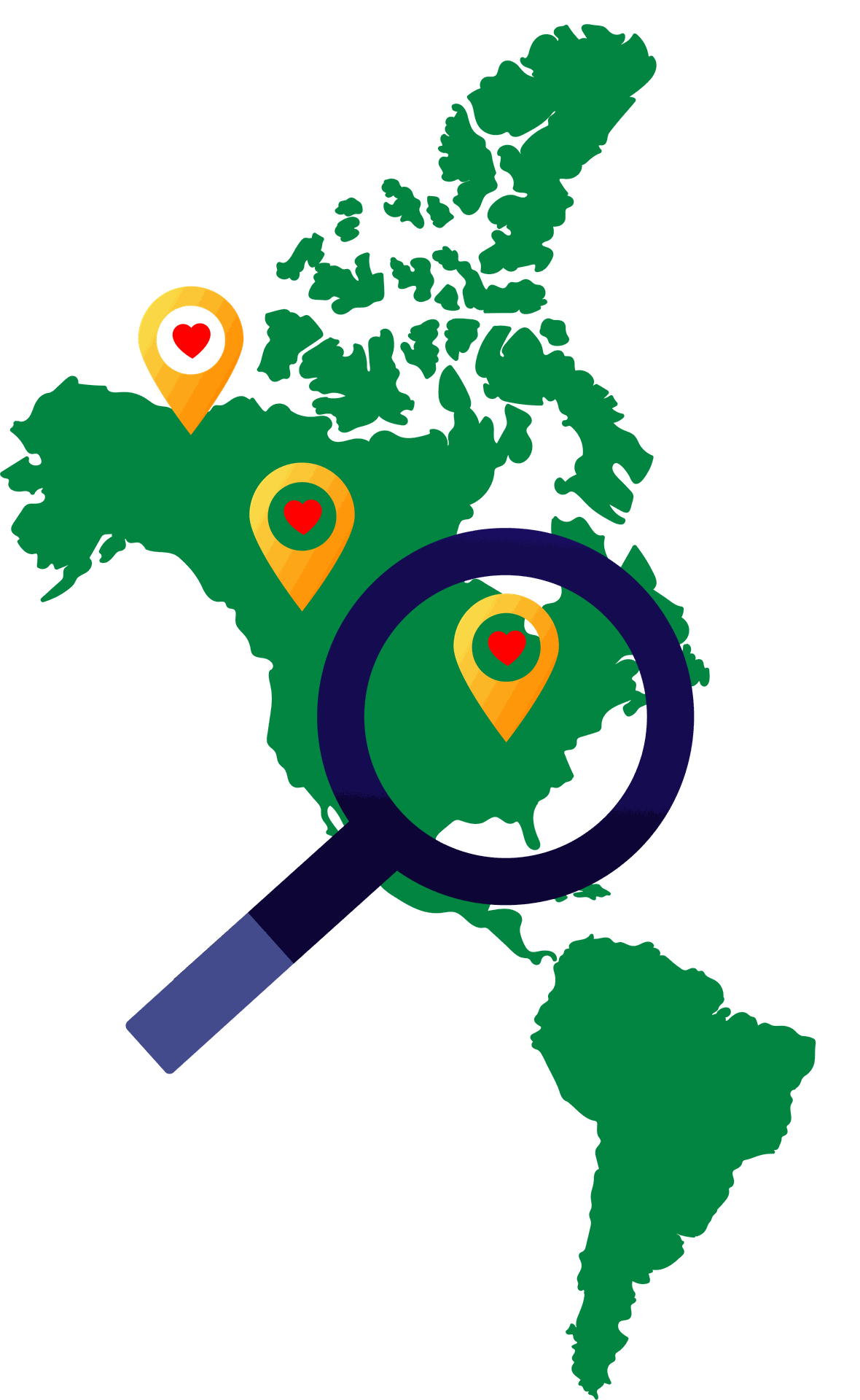
Before: territories drawn by state, with leads routed by where a company was headquartered.
Before: state-based territories made lead routing complex.
Our geographical, state-based territory approach was categorically not working. We were unable to accommodate the seasonality of leads based on where a company was headquartered. It became very difficult to route our leads because there was so much complexity in the lead routing rules.

Alli ManningChief Operating Officer, Challenger

The model was over-complicating routing, driving inequities and leaving top accounts uncovered. Alli needed a new approach, without the spreadsheet work, internal conflict and wasted time that usually come with territory changes.

What they did

Redefine, reprioritize, redesign

This is a BoogieBoard customer story told in partnership with Rev. Rev found the right accounts; BoogieBoard turned them into territories.

1Redefine the ideal customer, with Rev

In the middle of the November planning season, the target customer had evolved and the CRM data wasn't cooperating. Alli's choice: “do we invest time, effort, energy, augmenting and enriching our very complex, very outdated CRM to try to understand our customers ourselves? Or do we invest in the cutting edge AI machine learning option that allows us to kind of skip a level in terms of how sophisticated our data ends up being?”

She enlisted Rev, which helps companies find their next best customers before they show intent. Challenger gave Rev a seed list built on five years of history: “we optimized for our ideal customer, which for us means they renew for at least two and a half, three years. They stay with us, they spend at a regular clip.” With lifetime value, renewal rates and buying structure layered in, Rev built an aiCP — a living model of the ideal customer — and ranked every company with a Rev Score.

2Find the accounts they'd been missing

Ranking wasn't the only goal. “Rev was able to provide 1,200 new accounts that we simply didn't see. We simply didn't know these companies even existed, which is staggering when you step back and think about it. … So it's a bullseye within a bullseye.” Through Rev's Salesforce integration, the new accounts landed in Challenger's CRM with enriched data — two strong lists of “customers we wish we could clone,” one enterprise and one SMB.
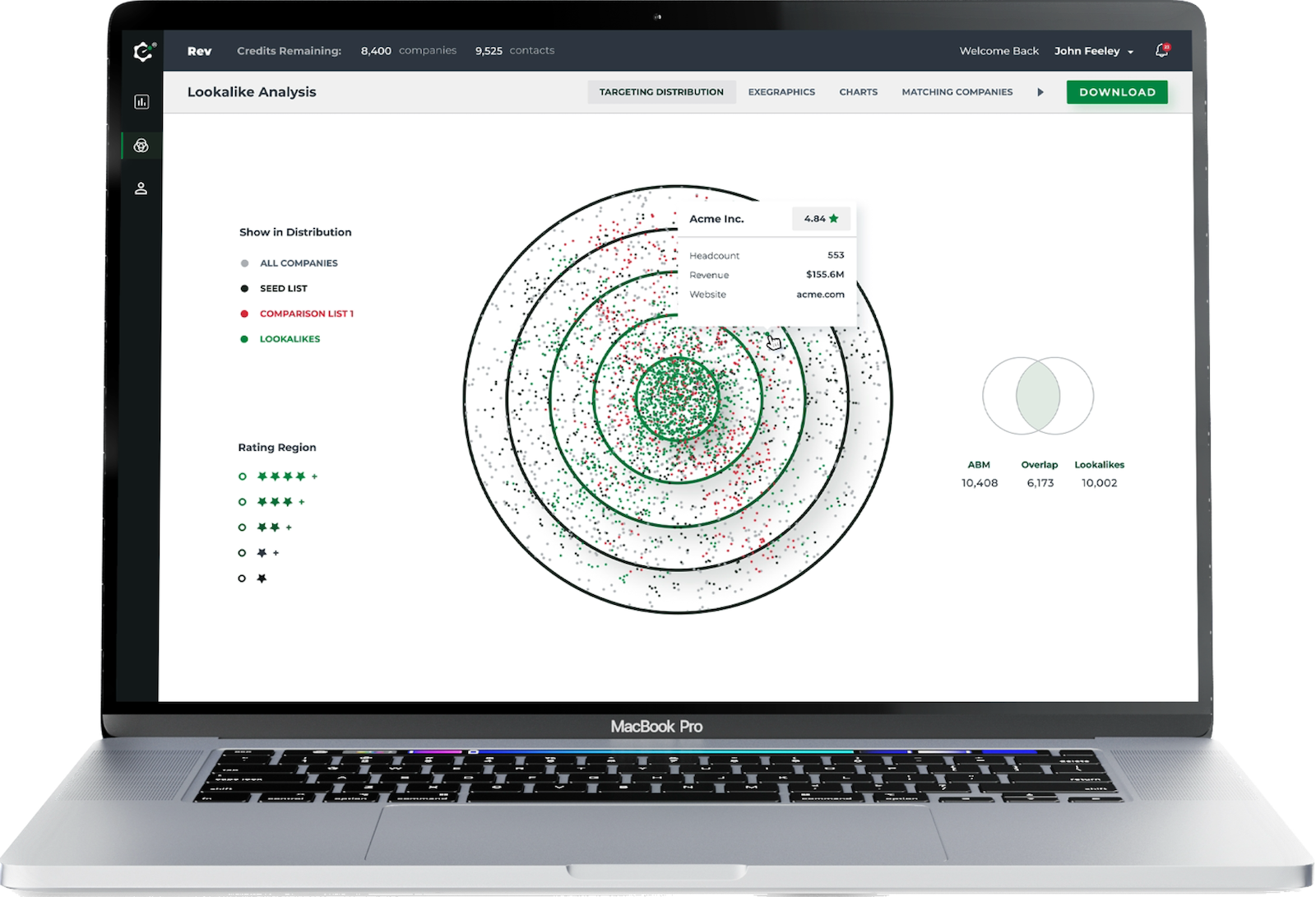
1,200net-new ideal-fit accounts Challenger didn't know existed — found by Rev, then shared out evenly in BoogieBoard
Rev's lookalike analysis ranking companies against Challenger's ideal customer profile.
Rev ranked every company against Challenger's ideal customer profile.

3Divide and conquer, with BoogieBoard

Instead of assigning reps to states, Challenger moved to “a clean named-account approach [that] offered visibility into outbounding, time zone efficiencies, and allowed us to distribute the Rev accounts in a way that optimized for the sellers' location.”

Illustration of named-account territories balanced across a map, with charts.
Divide and conquer: named accounts balanced on Rev Score, company size and seller location.

The team fed the new market and its sales team structure into BoogieBoard, which balanced accounts on Rev Score, company size and seller location. It produced several coverage options, each built for equity and minimal disruption. Challenger picked the one that best fit its goals, pushed the new assignments to its CRM, and sellers got to work.

It was very important to us as a leadership team and as a Rev Ops team, to engender trust by distributing the accounts that we got from Rev equitably. Ultimately, we ended up with some strong lists and very happy sellers.
Alli ManningChief Operating Officer, Challenger

Balanced for time zones, too

Alli didn't want reps calling across time zones, and didn't want to give up equity to avoid it. BoogieBoard's GeoAware balancing can factor in rep location, keeping accounts within specific geographic areas or loosely clustered by state, ZIP code or time zone while every book stays balanced.

Challenger also used the carve to test an idea: “Maybe if we give every seller half of one segment and half of the other, we can see who can emerge as being a specialist at one or the other — is there one seller who's amazing with those big companies and another seller who's amazing with the smaller ones?”


How the carve worked

Fair, measured on every goal at once

Challenger's definition of fair (Rev Score, company size, seller location and an even enterprise and SMB mix) became balance goals. BoogieBoard weighed them together and returned options to choose from, instead of a debate in a conference room.
  • Balance on any account field, including scores from tools like Rev
  • Keep books close to each rep's location and time zone
  • Compare options, pick one, push it to Salesforce
The results

Targeted lists and happy sellers

Every rep got a highly targeted list of about 300 accounts, half SMB and half enterprise. “The specificity with which we're able to assign our territories has really helped the sellers focus,” said Alli. Sellers were coached to start nurture campaigns with the large organizations first, marketing launched ABM against the list, and reps worked the smaller accounts while waiting on the big ones.

~300

accounts in every rep's targeted list

50 / 50

SMB and enterprise in every book

28%

rise in pipeline ICP match in one quarter, tracked in Rev

Change management turned out to be the easy part. “Implementing both solutions was extremely easy, there's a lot of synergies around the two products,” said Alli. “There was a comprehensive kind of intake process where BoogieBoard asked us what we wanted to optimize for.”

Carving out territories is always painful. It is like doing your taxes. BoogieBoard is the TurboTax of territory carving.
Alli ManningChief Operating Officer, Challenger

“It was consultative in nature. It was super simple, transparent, which I think both my team and the sellers themselves really appreciate. So whilst the time savings were immeasurable and enormous because it was done in probably 48 hours, the transparency and the consultative nature of the service is really what will make us continued BoogieBoard customers.”

The pipeline shows it. “Our pipeline is now growing exclusively with accounts that match our ICP. In fact, in just one quarter, our AIM, the percentage of accounts in our pipeline that match our ICP, has improved by 28%!”

What's next

“The sky is the limit”

With Rev, Alli's team can measure and adapt to ICP and market changes. With BoogieBoard, they can deploy new strategies quickly. Next on the list: verticalization, and territory carve-outs for individual sellers based on their performance. Together, the two let Challenger “be much more iterative and quick” with how it updates lists and gets them into the hands of sellers and its ABM programs.

I wish I would have found you sooner. This is the future… don't delay.
Alli ManningChief Operating Officer, Challenger
FAQ

Challenger's territory redesign, in brief

How long did Challenger's territory redesign take?

Two months from kickoff to deployed territories, including new ideal customer profiles from Rev and a reprioritized market. The territory carve itself, in BoogieBoard, took about 48 hours.

How many new accounts did Rev find for Challenger?

1,200 net-new accounts that matched Challenger's ideal customer profile and weren't in its CRM. BoogieBoard then distributed them evenly across the sales team.

What was wrong with the old territory model?

Challenger's state-based geographic territories made lead routing complex, drove inequities between reps and left top accounts uncovered. It moved to named-account territories balanced on Rev Score, company size and seller location.

What results did Challenger see?

Each rep received a targeted list of about 300 accounts, half SMB and half enterprise. Within one quarter, the share of pipeline accounts matching Challenger's ICP rose 28%, as measured in Rev.

See your own territories balanced — on the first call.

Bring a CSV or connect Salesforce. We'll build a balanced plan from your real accounts while you watch.

See pricing