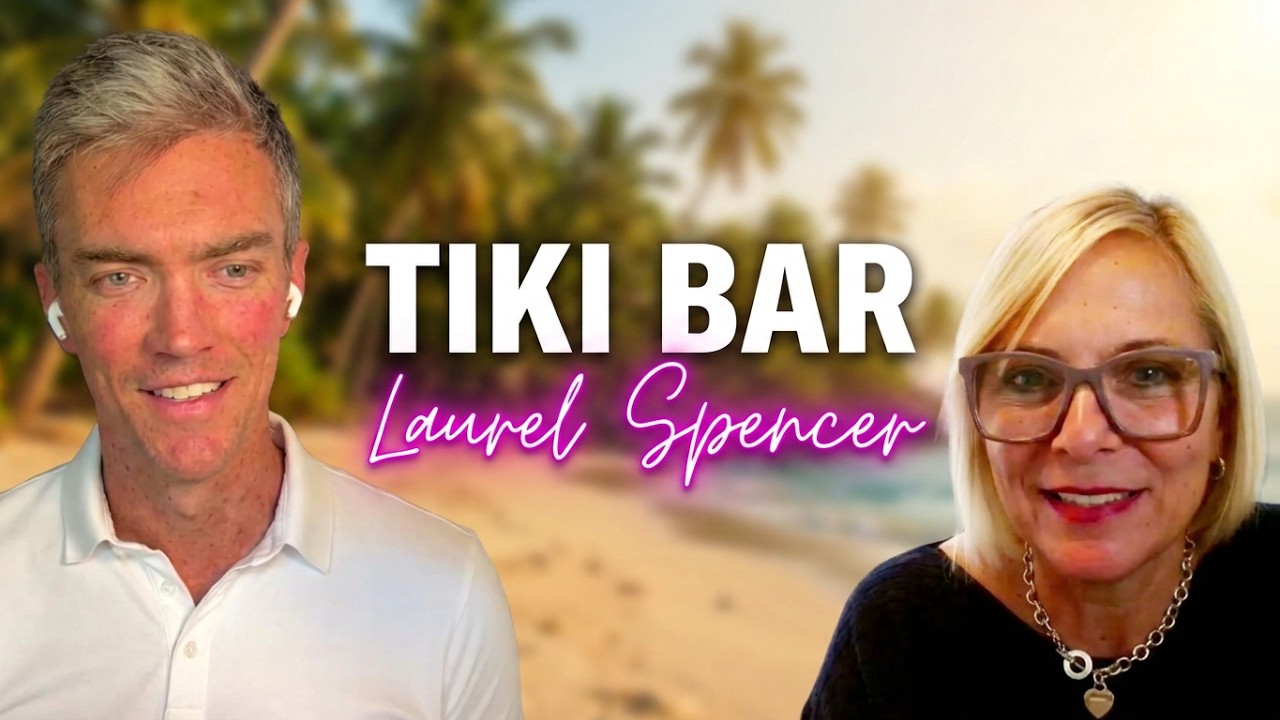
Laurel Spencer, SVP of Global Sales and Marketing at Amcor, on collecting door-to-door newspaper payments at age ten, why she thought sales was a detour from a "real" career, and integrating two $12 billion companies at once.
Watch the full episode on YouTube
Chapters
- 00:00 — Meet Laurel Spencer
- 01:33 — Delivering the Ann Arbor News, and getting paid to do it
- 06:48 — A sales trainee program, and a grandfather unimpressed
- 09:42 — Cold calling with a Rand McNally atlas, as one of the only people who looked like her
- 11:56 — The sales conference, the head table, and the moment it clicked
- 13:50 — Making the field relevant to the factory floor
- 19:45 — Leaving twelve years behind for Amcor
- 22:05 — What "best of the best" actually means after a dozen acquisitions
- 25:28 — What she's unusually good at now that she wouldn't have predicted
- 27:46 — Two $12 billion companies, and building one playbook
- 29:07 — Last call: protect your triangle
Meet Laurel Spencer
Laurel Spencer is Senior Vice President of Global Sales and Marketing at Amcor, a giant in the packaging industry. She joined the conversation from Chicago, and her path into sales leadership started decades earlier and several rungs down, delivering newspapers door to door.
Asked the standard opening question, what she wanted to be when she grew up, her answer had two options, neither of which was sales.
Listen, it's actually a good question. And now that you've asked me, I remember that I wanted to be an Olympic swimmer, but I definitely was not good enough to be an Olympic swimmer. Like no chance, like maybe only in my mind or my parents' minds, but never in anybody else's mind. And then if I wasn't gonna be an Olympic swimmer, I was going to be a lawyer. So one of the two. Probably better to be an Olympic swimmer.
She was on her middle school swim team. She did not make the high school squad. That settled the Olympic question early.
Delivering the Ann Arbor News, and getting paid to do it
Her first paid job, at around age ten, was as a door-to-door newspaper carrier for the Ann Arbor News in her Michigan neighborhood.
I do, you know, Kevin, and I think it's kind of why I've always fallen in love with sales and why I enjoy it so much. My first job, I was a door-to-door salesperson for the newspaper. So I actually pedaled newspaper for the Ann Arbor News.
Asked whether a ten-year-old felt any apprehension about knocking on a stranger's door and talking about money, she reframed it as her first real skill.
I will tell you that I'm quite impressed with my collections capabilities at the age of 10. By the way, I did keep this paper route well until I was in high school, which was kind of uncool as well. But it paid the bills and I liked my customers.
She ran her own informal loyalty program before she had a word for it: baking cookies for customers she sensed were lonely, delivering them with the bill, which she noticed reliably improved both payment timing and tips. One regular customer, a retired policeman who rode a Goldwing motorcycle, became someone she looked forward to seeing on her route.
No one coached her into any of this.
I don't think so. I think I just liked it. I just liked people. I liked my customers. I liked being out there.
A sales trainee program, and a grandfather unimpressed
She arrived at the University of Michigan with no career plan and, by her own account, still had none as a senior. A financial reality forced the decision: on scholarship, carrying debt, she went to her advisor and asked a blunt question.
I gotta graduate this year. What can I graduate with?
She sold spring break trips to fraternities and sororities to fund her own travel, cold-calling in a very literal sense, wallpapering Greek houses with flyers, and relying on whoever she knew to get her in the door. It was commission-based selling before she would have called it that.
After graduating with a general SNA degree, an on-campus recruiting program matched her, more or less by chance, with a privately held ink manufacturer near Ann Arbor worth roughly half a billion dollars. Because the interview cost her nothing, she took it, and was accepted into their new sales trainee program.
The program came with a condition: she had to accept a transfer anywhere in the country. After six months of training across different factories and sales territories, she was assigned Kentucky and moved from Ann Arbor to Louisville.
Her grandfather, a retired PhD chemist for Dow Chemical who was living with her parents at the time, was not impressed.
Grandpa, Grandpa, I got a job and I'm so excited about it. And he said, what are you gonna do? And I said, Grandpa, I'm gonna be a salesperson. And he said, what are you doing that for? There's no future in that. And here I am.
Cold calling with a Rand McNally atlas, as one of the only people who looked like her
The commission structure in Kentucky was not abstract.
You know, Kevin, if I didn't sell, I didn't eat. And if I didn't sell, I didn't pay rent.
She was also, at 22, frequently the only person in the plant or the pressroom who looked like her, in an industry that had not particularly welcomed women into field sales. There was no marketing department feeding her leads.
I was basically given the Rand McNally Atlas, a phone that was probably the same size as like your computer today, and I was call cold calling.
Without the tenure or connections of established competitors, she improvised. She sent postcards ahead of visits announcing when she'd be in the area. She recruited people to vouch for her to get appointments. She brought technical staff along on joint sales calls to supply the product knowledge she didn't have, since she wasn't a chemist.
So it was quite, I would say it was quite scary yet quite fun. And I think it created and brought out a level of creativity that I, you know, I guess I'd like to see all salespeople bring, right? And at that time I didn't have the luxury of having a no. I mean, I needed to sell.
The sales conference, the head table, and the moment it clicked
Around her second or third year, an invitation to a company sales conference produced a clarifying moment. She was seated at table one, closest to the stage, and didn't understand why until later.
I remember going in and somebody said to me, and I still remember this to the day, wow, I didn't realize we could bring our secretary to come to the sales conference. And I said, well, I didn't know either. Like, are there secretaries here? And then I later realized he was talking about me.
At that conference she was awarded second-highest net sales in the company, at 23 or 24 years old.
I think candidly, I think before that I was head down. It was all about just delivery and learning as much as I can and delivering for my customers and just really trying to be the best that I could be at that profession. I think at that point I finally was like, well, hold on a second. This is kind of fun.
Making the field relevant to the factory floor
As she moved into managing a geography and later a region, partly amid an acquisition where most of the newly acquired factories were closed except the ones under her watch, she identified a pattern she'd carry for the rest of her career: the field determines the work, not the org chart.
The field itself needed to determine the work and the approach I did. And what I think I did quite successfully there was the ability to make the field relevant, not only for the salespeople, but also relevant for the production workers, relevant for the factory, relevant for HR.
Bringing the customer's point of view directly into internal conversations changed how factory teams understood their own work: not manufacturing for its own sake, but manufacturing something that had to run correctly on a specific customer's line, with a real consequence attached if it didn't.
That there was a consequence associated with that. And so I really tried to kind of create this sort of one team, really servicing the customer.
Leaving twelve years behind for Amcor
After roughly a decade at the ink manufacturer, including time overseeing manufacturing sites and eventually a vice president role, she left for Amcor, a substantially larger and more operationally driven organization.
It was substantially more complicated, substantially more operationally driven, so really solid and strong operations, and operations really determining a lot of what sellers did.
She had read an extensive Voice of Customer survey before joining and knew part of her mandate was bringing a more customer-led approach into the organization. What transferred from twelve years at her previous company was her commercial skill. What didn't transfer at all was product knowledge.
What I didn't know was the product at all. It was a completely different product, completely different manufacturing.
Man, I remember those first early days of some of those meetings and getting asked questions and candidly having no idea what the answer was. Like none. And I wasn't always easy, that's for sure.
What "best of the best" actually means after a dozen acquisitions
Amcor is a highly acquisitive company, and by this point in her career she had been through the integration cycle dozens of times. She named a specific discipline the company runs on every deal.
Amcor always runs a best of the best process. So you're always having to, you're always with every combination, you're getting reevaluated in terms of your performance versus others and your ability to lead.
Every combination brings a genuinely optimistic dimension too: two companies, each strong in a different capability, one perhaps deep in material science, the other in product conversion, combining into something better than either alone.
It's gotta be, you know, a combination that when you put one and one together, you can have three for your customer. It's gotta be, and it's gotta be focused on, you know, on the customer. And that candidly you need to have a playbook.
That playbook, built and refined over years, spans day-one org design, customer communications, clean-room protocols during the deal, and cross-selling evaluation. It is the infrastructure that makes day one hundred and day three hundred and sixty-five work, not just the announcement.
She also spent over six years living and working in Switzerland in a global role, which she describes as close to ideal for the kind of international coordination the job required, and which gave her young children an early, direct experience of different cultures.
What she's unusually good at now that she wouldn't have predicted
Asked what she's unusually good at now that her younger self wouldn't have predicted, her answer was immediate and specific: patience.
A lot of mistakes. I think a necessity.
If I say something or... it at times it can be just taken almost as like it has to be done. And so if I don't allow other people to come up with ideas and solutions because I'm not patient enough to allow them to get there, then it's going to be the world according to Laurel. And that's not the best world for everybody.
She also named a belief reversal specific to her own career logic. Early on, she assumed sales was a detour she'd eventually need to leave, that operations, finance, or a general management track were the real path to running a company.
I always thought that my route needed to be out of sales to really, I don't know, get somewhere or to really have the skills capable to run a company or other things. And I couldn't be more wrong now.
What I've realized is that what we do in sales is uniquely difficult to do and likely has the underlying capabilities to run companies and run businesses with better outcomes than other functional areas I could have put more energy into. And so I firmly believed early in my career I was gonna have to move out of sales, and I am so glad I never did.
Two $12 billion companies, and building one playbook
At the time of the conversation, she was actively leading the commercial integration of two $12 billion companies that had just come together, which she raised unprompted as what she was most excited about.
So we put two $12 billion companies together. I led the commercial integration for that, really with the foundation that we have so much to offer as one AMCO in bringing the two companies together than we ever did before.
She's watching the effect show up concretely: field teams across the combined organization working together, cross-sell opportunities opening between divisions, and larger deals reaching the table that cut across both product lines and geographies.
And I think we're starting to figure out how to do that better than even a year ago when we first came together.
Last call: protect your triangle
Every Tiki Bar conversation closes with the same question: one thing you find yourself recommending to everyone.
Laurel gave two. The first was physical: protect the triangle of family, work, and health with a genuine daily activity habit, which she called essential in a role like hers. The second was a practice of ongoing personal purposefulness that she deliberately doesn't tie to New Year's.
Really being a lot more purposeful in the things outside of work that I want to also bring in, because it's also easy to work 24-7. And that also doesn't make you a really well-rounded human.
Concretely, that means tracking things like how many books she wants to read in a year, the mix of fiction and nonfiction, and which clubs or communities she wants to be part of, treated with the same intentionality as a work goal rather than left to chance.
Mentioned in this episode
- Amcor — global packaging company where Laurel is SVP of Global Sales and Marketing
- Ann Arbor, Michigan — where she grew up and ran her first paper route
- University of Michigan — where she studied and sold spring break trips to fund her own travel
- Louisville, Kentucky — her first sales trainee territory
- Switzerland — where she lived and worked in a global role for over six years
- Henry Schuck, CEO of ZoomInfo — referenced by Kevin as sharing a strikingly similar first-job story
About the guest
Laurel Spencer is Senior Vice President of Global Sales and Marketing at Amcor. She began her career as a sales trainee at a privately held ink manufacturer, rising over twelve years to oversee manufacturing sites, sales teams, and human resources before joining Amcor. She has led commercial integration across numerous acquisitions, including the recent combination of two $12 billion companies, and spent more than six years based in Switzerland in a global leadership role.