Podcast
Tiki Bar with Eli Kaufman | From Fenway kid gigs to RevOps architecture
Published Nov. 14, 2024 by BoogieBoard Bot
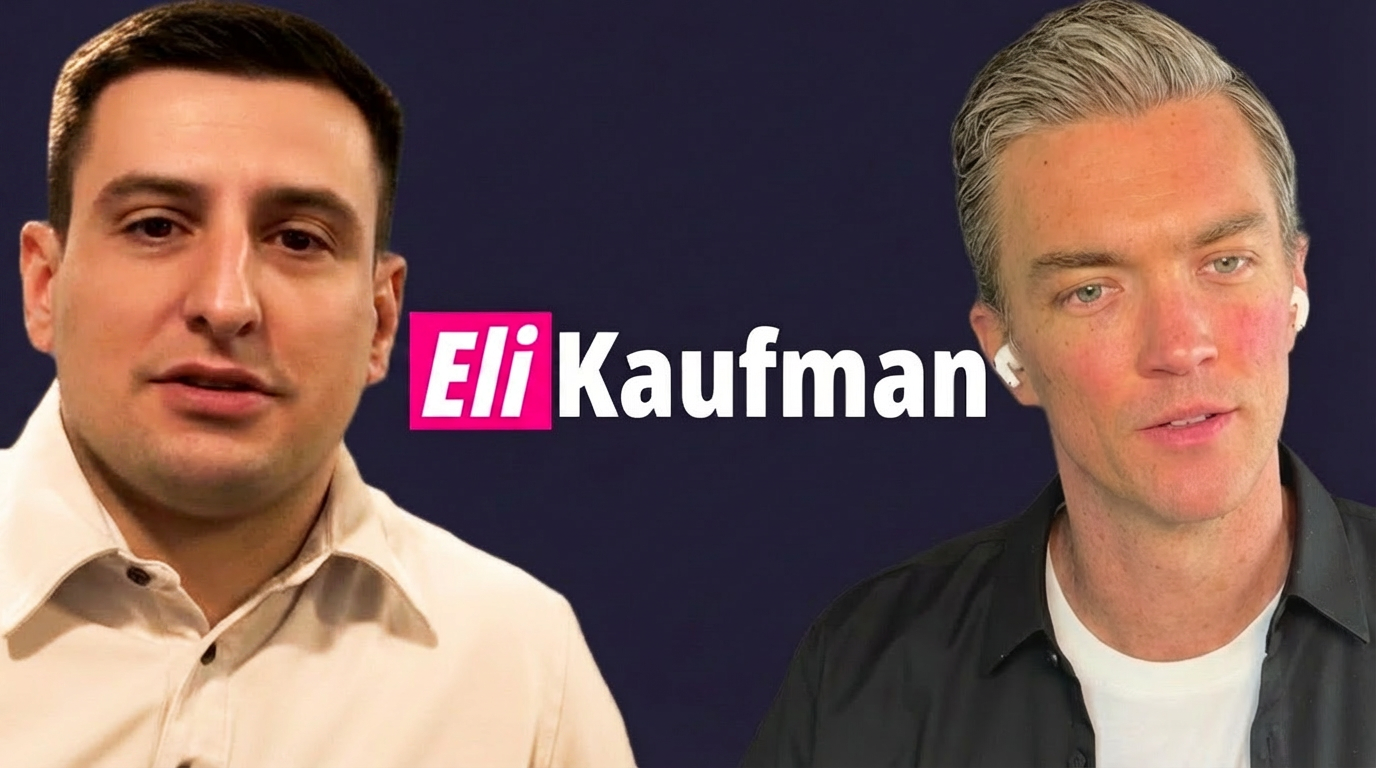
This week at the Tiki Bar, Kevin sat down with Eli Kaufman, who leads revenue operations at Sweep. Eli’s path isn’t your usual SDR-to-ops arc. It runs from Walkman-and-bike paper routes to writing Fenway Park PA scripts, closing six-figure season ticket deals, and then—after a hard personal reset—teaching himself the tooling and architecture that power modern RevOps. It’s a story about momentum, reframes, and the nuts-and-bolts discipline that lets a one-person ops team punch above its weight.
Growing up baseball: the 12-year-old in a 1946 uniform
Eli grew up a die-hard baseball kid in Boston. By age 12, he’d found his way into the Red Sox organization thanks to a ticketing event, an EVP-led Q&A, and very visible baseball nerdery. With help from mentors Dr. Charles Steinberg and Sarah McKenna, he started a ballpark role most fans only see in old photos: walking out onto Yawkey Way in a throwback 1946 Red Sox uniform to handwrite the day’s starting lineups alongside the mascot.
That gig morphed into kid reporting for Red Sox Kid Nation—interviews, spring training access, and essays on experiences like watching from inside the Green Monster. The early reps in content and exposure to a front office became a throughline: get close to the work, build relationships, and document what you’re learning. It even helped shape where he landed in college (Elon) and how he blended communications with business.
From ghostwriting Fenway intros to selling the dream
Post-college, Eli returned to the Red Sox in fan services and entertainment—writing the pregame PA scripts that start with “Ladies and gentlemen, boys and girls, welcome to Fenway Park.” Special days meant space for craft: honoring Marathon winner Meb Keflezighi or introducing a celebrity first pitch like Rob Reiner. Then came a leap to the Sales Academy: inside sales with a quota, low base, a leaky-roof bullpen across from Fenway, and a lot of character-building reps.
He learned quickly. Selling Red Sox tickets isn’t a hostile cold call; it’s a conversation from a place people love. He knew every seat sightline in the park and could match product to fan. One standout deal: a Washington lobbyist on the season ticket waitlist landed four seats behind the plate at roughly $55K per seat, 81 games, five years—about $250K a year in ARR and close to $1M total. Not a one-call close, but a masterclass in trust and timing.
To advance in sports, you often have to move teams and cities. Eli took the jump to Madison Square Garden to sell group tickets in New York—keeping the big-brand equity while finding a new ladder to climb.
A hard pivot: why operations, why now
In 2018, Eli’s mom passed unexpectedly. Back at work a week later, the role had shifted under new leadership to high-activity, smile-and-dial with commission tied to activity. It wasn’t tenable. He asked his VP, Christy, if he could fill department gaps. She pointed him to sales operations: number-crunching, Excel, what’s working, where to focus. He put himself through Excel and data analysis bootcamps and made enough impact to open a new path.
Soon the bigger decision surfaced: stay in sports ops (likely outside New York) or move to tech. Priorities had changed—work-life balance, trajectory, staying in New York, and finances. Tech it was. He found a boss and mentor (Jason) who handed him the keys to Salesforce—with a week-long admin bootcamp to get up to speed—and brought in a RevOps consultant who modeled a true full-funnel approach: marketing to renewal, intent to churn. Front-row seat, fast learning curve.
RevOps as architecture: first 90 days, nonstarters, and bandwidth
Eli’s approach today starts with architecture. Before dashboards and enablement, he locks the scaffolding: accurate sales process design, timestamping stage entries and exits, hard entry/exit criteria, documentation, and a clear view of top-of-funnel intent and engagement. Those are nonstarters—if they’re wrong, everything built on top wobbles.
- Be a sponge your first 90 days. Map stakeholders, culture, and why things look the way they do before proposing changes.
- Fix the foundations. Stages, definitions, routing, data hygiene, and timestamps come before analytics.
- Document hard criteria. Entry/exit rules reduce sandbagging, stage drift, and reporting fiction.
At Sweep today (~65 people with a heavy GTM mix), he’s a team of one. The tension is familiar to many solo operators: high technical and stakeholder demand squeezes proactive, strategic time. The unlock is creating bandwidth to become an advisor—bringing conversion math, pipeline reality, and renewal signals to CEOs and CROs who don’t always have that view, even if the dashboards exist.
What he’d tell his younger self
Enjoy the ride more. Drive is useful, but it can crowd out the process. Eli’s learned to trust his ability to navigate stakeholders and hard problems—and to keep perspective. That extends beyond work. With two psychotherapist parents, he gravitates to tools that reshape self-talk. One book he revisits: What to Say When You Talk to Yourself. It frames how early programming shapes our inner voice and offers a practical reset: speak to yourself the way you’d speak to a friend.
Watch the full Tiki Bar episode with Eli Kaufman here: https://www.youtube.com/watch?v=zanWfxZnnpw
Thanks to Eli for walking us from handwritten lineups to RevOps blueprints—and for the reminder that foundations, in ballparks or pipelines, decide how high you can build.
Full episode: https://www.youtube.com/watch?v=zanWfxZnnpw