Resource
Rules of Engagement (ROE) for Your Sales Organization | Template, Prompt Library, & How-to Guide
Published April 28, 2025 by Kevin Davis · Updated March 31, 2026
What are Rules of Engagement (ROE) and Sales Policies?
What are Rules of Engagement (ROE) and Sales Policies?
Rules of Engagement (ROE) are the internal rules, principles, and workflows that govern your sales process — the instruction manual for how your team plays (and wins) the game. In sales, the stakes are high, emotions run hotter, and without clear ROE, things fall apart fast. A strong ROE keeps everyone aligned, reduces conflict, and drives better results.
What This Guide Will Help You Create
By following this guide, you will create a comprehensive internal reference document that defines all the rules, policies, and processes for your sales organization. This document will become the definitive source of truth that your sales team can reference to understand:
- How territories are assigned and managed
- Who owns which accounts and opportunities
- How leads are distributed
- What happens when deals cross territories or teams
- How sales recognition programs work
- And much more
How to Use This Guide
This isn't just a template - it's an interactive guide that walks you through documenting your own unique sales processes. Here's how it works:
- Each section contains a ready-to-use prompt
- Simply copy the prompt in the code block
- Paste it into a conversation with your AI
- Answer the questions with your organization's specific information
- Save the resulting content for that section of your ROE document
- Follow the recommended sequence
- We've arranged sections in a logical order that builds upon previous information
- Start with foundational elements before moving to operational details
- Compile into your final document
- After completing all sections, combine them into a single reference document
- Add the introduction (created last) to the beginning
- Format consistently and add internal links between related sections
The Complete Process: From Start to Finish
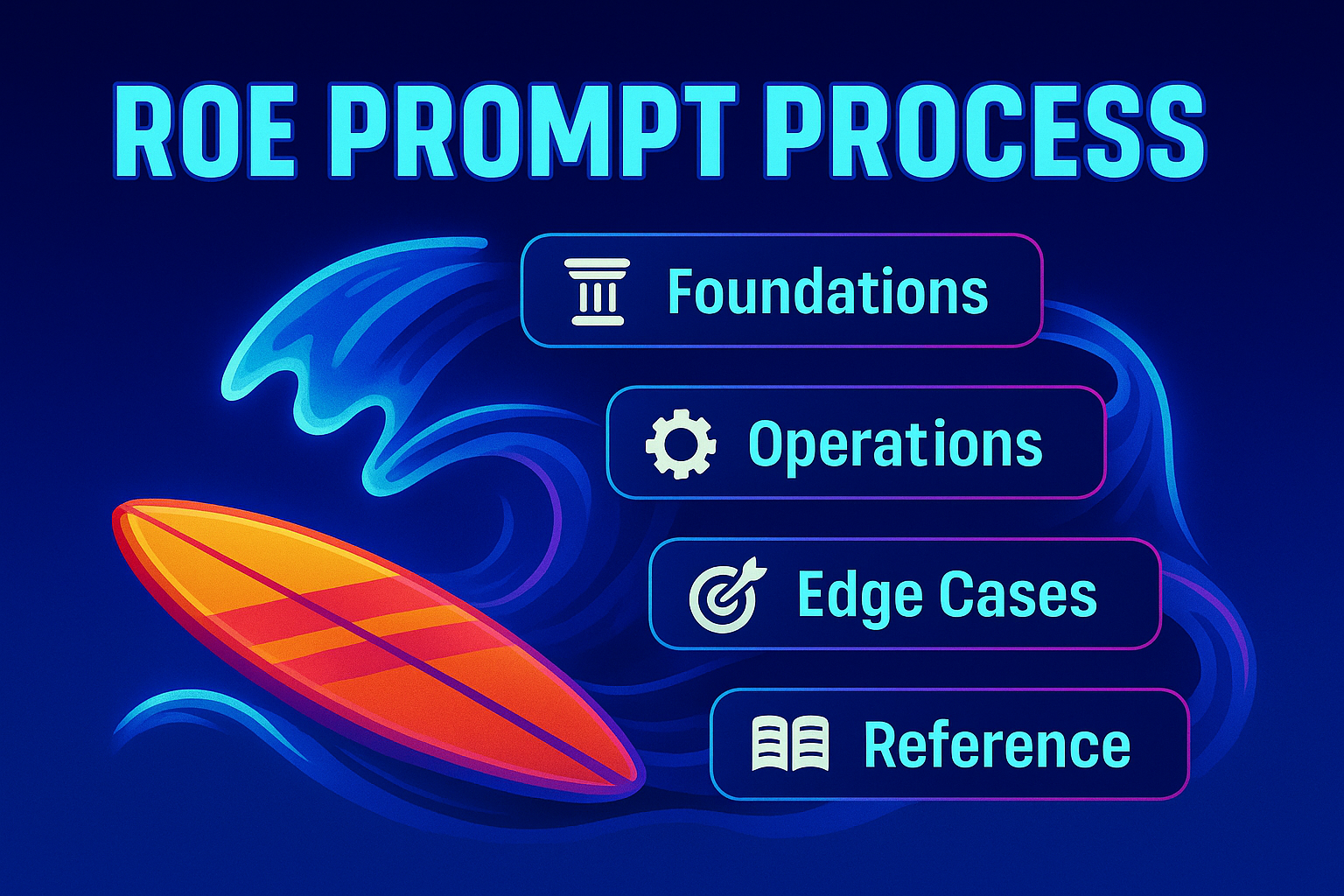
- Initial Planning
- Identify stakeholders for each section
- Schedule working sessions
- Gather existing documentation
- Create Foundation Sections (1-4)
- Define what accounts are and how they're structured
- Establish territory and organizational structure
- Document Operational Processes (5-9)
- Define opportunity management and routing
- Establish dispute resolution processes
- Add Special Cases (10-11)
- Document RFP processes
- Define recognition programs
- Complete Reference Elements (12-14)
- Create planning calendar
- Compile resources section
- Write introduction
- Review, Publish, and Maintain
- Get stakeholder approval
- Establish update processes
- Schedule regular reviews
SECTION 1: Account Definition
Purpose: Establish the foundation by defining what an account means in your organization and how accounts are classified.
Copy this prompt, paste it to your AI, and answer the questions:
# Account Definition Documentation

I need to document how accounts are defined in our sales organization. Please ask me the following questions and help me create a comprehensive reference document about our account definitions.

## Key Areas to Cover:

1. Basic Account Definition
   - What officially constitutes an "account" in our system?
   - What minimum information is required to create an account?
   - Who has permission to create accounts?

2. Account Types and Classifications
   - What different types of accounts exist in our system?
   - How are accounts segmented or classified?
   - What criteria determine account classification?

3. Account Data Standards
   - What required fields must be populated for accounts?
   - What naming conventions are used for accounts?
   - How are duplicates identified and handled?

4. Account Maintenance
   - Who is responsible for account data quality?
   - How frequently should account data be reviewed?
   - What is the process for merging or retiring accounts?

5. CRM Representation
   - How are accounts represented in our CRM?
   - What key account fields should users understand?
   - Are there any custom account objects or relationships?

Please format your responses into a clear, well-organized reference document that our sales team can use to understand our account definitions and processes.
SECTION 2: Account Hierarchies
Purpose: Document how your organization handles parent-child relationships between accounts and complex corporate structures.
Copy this prompt, paste it to your AI, and answer the questions:
# Account Hierarchy Management Documentation

I need to document how we manage account hierarchies and parent-child relationships in our sales organization. Please ask me the following questions and help me create a comprehensive reference document.

## Hierarchy Structure

1. Parent-Child Definitions
   - How do we define parent-child relationships between accounts?
   - What criteria establish a parent-child connection?
   - How many levels of hierarchy are recognized in our system?
   - How do we handle holding companies or complex corporate structures?

2. Hierarchy Data Sources
   - What are our primary sources for hierarchy data?
   - How are acquisitions and divestitures tracked and updated?
   - Who is responsible for maintaining hierarchy data?
   - What is the process for disputing or correcting hierarchy relationships?

3. CRM Representation
   - How are account hierarchies represented in our CRM?
   - What fields or objects track hierarchy relationships?
   - How are hierarchies visually presented to users?
   - What reporting capabilities exist for hierarchical structures?

## Account Ownership Models

1. Global vs. Local Ownership
   - Is account ownership assigned at the parent level, child level, or both?
   - What determines whether accounts have global or local ownership?
   - How do global and local account owners collaborate?
   - What is the escalation path for ownership conflicts?

2. Ownership Assignment Logic
   - What factors determine ownership assignment within hierarchies?
   - Is ownership based on geography, division, product line, or other factors?
   - How are ownership changes handled during reorganizations?
   - Who has authority to modify ownership within hierarchies?

## Sales Motion Alignment

1. Target Account Strategies
   - How do account hierarchies influence our target account strategies?
   - Are different approaches used for headquarters vs. subsidiaries?
   - How does the sales motion differ across hierarchy levels?
   - Are certain hierarchy levels prioritized over others?

2. Opportunity Management
   - To which level in the hierarchy are opportunities associated?
   - How are opportunities routed within account hierarchies?
   - How are deals spanning multiple hierarchy entities handled?
   - Who owns opportunities that involve multiple entities?

## Compensation Implications

1. Credit Allocation
   - How is credit allocated for deals within hierarchies?
   - Are there differences in credit for parent vs. child deals?
   - How is credit shared between global and local teams?
   - What credit disputes are common and how are they resolved?

Please format your responses into a clear, well-organized reference document that our sales team can use to understand how we manage account hierarchies.
SECTION 3: Territories & Target Account Lists
Purpose: Define how accounts are divided into territories and how territory ownership is managed over time.
Copy this prompt, paste it to your AI, and answer the questions:
# Sales Territory & Account Distribution Documentation

I need to document how territories and account distribution work in our sales organization. Please ask me the following questions and help me create a comprehensive reference document.

## Territory Structure & Timeline

1. Territory Allocation Timeline
   - When do new territories officially go live?
   - What is the process and timeline for territory data updates?
   - How are territory changes communicated to the sales team?

2. Data Management
   - What is the source of truth for territory information?
   - Who maintains territory data and how frequently is it updated?

## Account Distribution Framework

1. Territory Composition
   - How are target accounts divided and allocated?
   - What factors determine territory makeup (geography, industry, account size, etc.)?
   - How do you ensure territory equity among sales reps?

2. Account Categorization
   - How are named/target accounts identified and assigned?
   - What is the approach for distributing:
     * Geographic territories
     * Net new prospect accounts
     * Existing customer accounts

## Rules of Engagement

1. Account Flexibility
   - Can reps add or remove accounts from their territories? If yes, what is the process?
   - What is the protocol for disqualifying accounts?
   - How are inbound leads handled versus outbound prospecting?

2. Role-Specific Guidelines
   - How do different roles (SDRs, AEs, AMs, CSMs) interact with territories?
   - How do overlay specialists operate within territories?
   - What are the rules for expansion representatives?

3. Ownership Responsibilities
   - Who owns renewal processes?
   - Are there different rules of engagement based on:
     * Customer segment
     * Geographic region
     * Industry vertical

## Governance & Dispute Resolution

1. Territory Validation
   - What responsibilities do reps have for validating their territory data?
   - What is the formal dispute process for territory or account ownership conflicts?
   - Who makes final decisions on territory disputes?

Please format your responses into a clear, well-organized reference document that our sales team can use to understand our territory structure and account distribution.
SECTION 4: Segments, Regions & Industries
Purpose: Define how your sales organization is structured across different dimensions and how these structures are represented in your CRM.
Copy this prompt, paste it to your AI, and answer the questions:
# Sales Organization Structure Documentation

I need to document how our sales organization is structured across segments, regions, and industries. Please ask me the following questions and help me create a comprehensive reference document.

## Segment Definitions

1. Customer Segmentation Framework
   - How are customer segments defined in our organization? (e.g., enterprise, mid-market, SMB)
   - What are the specific criteria for each segment? (revenue thresholds, employee count, etc.)
   - Are there sub-segments within major segments?

2. Segment-Based Team Structure
   - How is the sales team organized around these segments?
   - Are there dedicated teams for specific segments?
   - How does segmentation affect quota setting and compensation plans?

3. Segment Data Management
   - How are segments tracked and maintained in our CRM?
   - Who is responsible for segment classifications and updates?
   - How frequently are segment designations reviewed and updated?

## Regional Definitions

1. Geographic Coverage Model
   - What geographic regions structure our sales organization?
   - How are international markets divided and managed?
   - Are there specific boundaries or ZIP/postal code assignments for territories?

2. Regional Leadership & Reporting
   - What is the regional management hierarchy?
   - How do regional teams interact with segment-based teams?
   - Are there region-specific sales strategies or approaches?

3. Regional Data in CRM
   - How are regions represented and tracked in our CRM?
   - What fields define regional assignments?
   - Who maintains regional data accuracy?

## Industry/Vertical Definitions

1. Industry Classification System
   - What industry verticals does our organization recognize?
   - How do we categorize companies that span multiple industries?
   - Is there a formal industry classification system in use? (e.g., NAICS, SIC, custom)

2. Vertical Specialization
   - Are there industry-specialized sales teams or overlay roles?
   - What training or resources support vertical selling?
   - How does vertical focus influence go-to-market strategies?

3. Vertical Tracking in CRM
   - How are industry verticals tracked in our CRM?
   - Who maintains industry classification data?
   - How are industry trends and performance monitored?

## Cross-Dimensional Organization

1. Matrix Management
   - How do segment, regional, and industry dimensions intersect?
   - What is the primary organizing principle? (region, segment, or industry)
   - How are priorities managed across different dimensions?

Please format your responses into a clear, well-organized reference document that our sales team can use to understand our organizational structure.
SECTION 5: Opportunity Management
Purpose: Establish clear definitions and processes for managing sales opportunities throughout their lifecycle.
Copy this prompt, paste it to your AI, and answer the questions:
# Opportunity Management Documentation

I need to document how sales opportunities are managed in our organization. Please ask me the following questions and help me create a comprehensive reference document.

## Opportunity Opening Guidance

1. Qualification Criteria
   - What specific criteria must be met before creating a formal opportunity?
   - Is there a formal qualification framework in use? (BANT, MEDDIC, etc.)
   - What minimum information is required to open an opportunity?

2. Creation Process
   - Who has permission to create opportunities in our CRM?
   - What is the process for converting leads or prospects to opportunities?
   - Are there different creation processes for different sources? (inbound vs. outbound)

## Opportunity Stage Framework

1. Stage Definitions
   - What are all the opportunity stages in our sales process?
   - For each stage:
     * What is the definition of this stage?
     * What entry criteria must be met to move into this stage?
     * What exit criteria must be satisfied to move out of this stage?
     * What is the expected duration of this stage?

2. Stage Progression Rules
   - Are stages required to progress sequentially or can they be skipped?
   - Is regression to earlier stages permitted? Under what circumstances?
   - Who has authority to approve stage movements?

## Activity Requirements

1. Required Activities by Stage
   - What specific activities must be completed in each stage?
   - For each required activity:
     * What is the detailed definition of this activity?
     * How is completion of this activity documented?
     * Are there quality standards for each activity?

2. Documentation Standards
   - What fields must be completed at each stage of an opportunity?
   - What documents must be attached to opportunities at each stage?
   - What information must be captured in opportunity notes?

## Opportunity Closing Guidance

1. Won Opportunity Process
   - What criteria define a won opportunity?
   - What documentation is required to close an opportunity as won?
   - What approvals are needed before marking an opportunity as won?
   - What post-win processes are triggered?

2. Lost Opportunity Process
   - What criteria define a lost opportunity?
   - What documentation is required when marking an opportunity as lost?
   - What reason codes must be selected for lost opportunities?
   - Is there a formal loss analysis process?

## Forecasting Integration

1. Forecast Categories
   - What forecast categories or confidence levels are used?
   - How do opportunity stages relate to forecast categories?
   - Who can assign or change forecast categories?

2. Probability Assignments
   - What probability percentages are assigned to each stage?
   - Can probability percentages be manually adjusted? By whom?
   - How do probability adjustments affect forecasting?

Please format your responses into a clear, well-organized reference document that our sales team can use to understand our opportunity management process.
SECTION 6: Holdovers, Transfers & Splits
Purpose: Define rules for special situations where opportunity ownership changes or is shared between multiple sales reps.
Copy this prompt, paste it to your AI, and answer the questions:
# Opportunity Transitions Documentation

I need to document how our organization handles opportunity holdovers, transfers, and splits. Please ask me the following questions and help me create a comprehensive reference document.

## Post-Close Ownership Transitions

1. Opportunity-to-Account Transitions
   - How long does an AE remain the primary rep on a deal after closing?
   - When and how does responsibility transition to Account Management?
   - Is there a formal handoff process between Sales and Account Management?
   - Are there different transition rules for different customer segments?

2. Transition Timeline
   - Is there a defined transition period with shared responsibility?
   - Does the transition happen immediately or gradually?
   - What activities must be completed before a transition is finalized?
   - How are transitions documented in the CRM?

## Account Transfers

1. Transfer Process
   - What is the formal process for transferring accounts between reps?
   - What documentation is required for account transfers?
   - Who must approve account transfers?
   - What is the source of truth for determining current account ownership?

2. Compensation During Transfers
   - How is compensation handled during the transfer period?
   - Is there a compensation split for in-flight opportunities during transfers?
   - How long does the original rep continue to receive compensation after transfer?
   - Are there different compensation rules based on the reason for transfer?

## Opportunity Splits

1. Split Eligibility
   - Under what circumstances can opportunities be split between reps?
   - What types of splits are recognized? (finder's fee, equal partners, etc.)
   - Are there minimum contribution requirements to qualify for a split?
   - Can splits occur across different business units or regions?

2. Split Documentation
   - How are opportunity splits documented in the CRM?
   - What approvals are required for opportunity splits?
   - When in the sales cycle must splits be documented?
   - Can split percentages be modified once established? If so, how?

## Special Customer Situations

1. New Logo Credit
   - What qualifies a deal for "new logo" credit or status?
   - How long does a company need to be inactive to be considered a new logo again?
   - Can multiple reps receive new logo credit for the same company?
   - How is new logo credit tracked and reported?

2. Churned Customer Re-engagement
   - How are churned customers defined? (duration without active business)
   - Who owns re-engagement with churned customers?
   - Is there special compensation for winning back churned customers?
   - How are churned vs. reactivated customers tracked in the CRM?

## Holdover Rules

1. Holdover Eligibility
   - Can leaders or reps place holds on accounts or opportunities that are transitioning?
   - What criteria must be met to qualify for a holdover?
   - What is the maximum duration of a holdover?
   - Who has authority to approve holdovers?

2. Holdover Process
   - What is the formal process for requesting a holdover?
   - How are holdovers documented in the CRM?
   - How are conflicting holdover requests resolved?
   - What regular review process exists for active holdovers?

Please format your responses into a clear, well-organized reference document that our sales team can use to understand how we handle opportunity transitions.
SECTION 7: Leads & Lead Routing
Purpose: Establish transparent processes for how inbound leads are qualified and distributed to the sales team.
Copy this prompt, paste it to your AI, and answer the questions:
# Lead Qualification and Routing Documentation

I need to document how leads are qualified and routed in our sales organization. Please ask me the following questions and help me create a comprehensive reference document.

## Lead Sources and Types

1. Lead Source Categorization
   - What are all the different sources of leads in our organization?
   - How are leads categorized by source? (marketing events, website, partnerships, etc.)
   - Are different lead sources treated differently in routing decisions?
   - How are lead sources tracked in our CRM?

2. Lead Type Definitions
   - What different types of leads do we recognize? (MQL, SQL, PQL, etc.)
   - What criteria define each lead type?
   - How do different lead types impact routing decisions?
   - Are there different SLAs for different lead types?

## Territory-Based Routing

1. Existing Account Mapping
   - What happens when a lead comes in from an account that's already mapped to a rep?
   - Are there exceptions to territory-based routing for existing accounts?
   - How are conflicts resolved when multiple reps claim territory rights?
   - How does previous opportunity history impact lead assignment?

2. Unmapped Account Handling
   - What process is followed when a lead comes from an account not already mapped to a rep?
   - How are new accounts assigned to territories?
   - What data sources determine territory assignment? (firmographics, geography, etc.)
   - What happens when territory information is incomplete or unavailable?

## Qualification Processes

1. Initial Qualification Path
   - Does an SDR/BDR qualify leads first, or do they go directly to AEs?
   - What qualification criteria are used?
   - What is expected qualification timeframe?
   - How is qualification documented in the CRM?

2. Qualification Responsibilities
   - Who is responsible for initial lead qualification?
   - What authority do qualifiers have to reject or reassign leads?
   - How are qualification disputes resolved?
   - What happens when qualification criteria change?

## Round Robin Systems

1. Round Robin Implementation
   - Is a round robin system used for any lead routing scenarios?
   - Which scenarios trigger round robin distribution?
   - What is the specific logic of our round robin system?
   - How is round robin fairness ensured?

2. Round Robin Targeting
   - Does round robin distribution go to SDRs, AEs, or both?
   - Are separate round robin pools maintained for different teams/regions?
   - How are specialists or overlay roles included in round robin distribution?
   - What happens when a rep is temporarily unavailable (PTO, etc.)?

## Service Level Agreements

1. Response Requirements
   - What are the required response times for new leads?
   - How do response requirements vary by lead source or type?
   - How is response time tracked and reported?
   - What are the consequences for missing response SLAs?

2. Reassignment Triggers
   - When are leads automatically reassigned due to inaction?
   - What is the process for manual lead reassignment?
   - Who has authority to reassign leads?
   - How are reassignments tracked and reported?

Please format your responses into a clear, well-organized reference document that our sales team can use to understand our lead qualification and routing processes.
SECTION 8: Partners & Reseller Motion
Purpose: Document how your organization works with channel partners and how partner-sourced business is handled.
Copy this prompt, paste it to your AI, and answer the questions:
# Partner and Reseller Motion Documentation

I need to document how our organization works with partners and resellers. Please ask me the following questions and help me create a comprehensive reference document.

## Partner Ecosystem Strategy

1. Partner Types and Classifications
   - What types of partners do we work with? (resellers, referral partners, solution partners, etc.)
   - How are partners categorized or tiered in our program?
   - What criteria determine partner tier or status?
   - How often are partner classifications reviewed and updated?

2. Strategic Alignment
   - Why has our organization chosen to partner with each type of partner?
   - What strategic objectives does each partner type support?
   - How do partner relationships align with our overall go-to-market strategy?
   - What metrics measure the success of our partner program?

## Partner Sales Motions

1. Go-To-Market Models
   - What sales motions do we use with partners? (co-sell, resell, referral, etc.)
   - How are different sales motions defined and distinguished?
   - Can the same partner engage in multiple sales motions?
   - What documentation defines each partner's authorized sales motions?

2. Joint Selling Activities
   - When and how do direct sales teams engage alongside partners?
   - What is the process for planning and executing joint sales activities?
   - How are joint sales territories or accounts defined?
   - What governance exists for joint selling situations?

## CRM Integration

1. Partner Record Management
   - How are partners represented in our CRM?
   - What partner data is tracked in our CRM?
   - Who maintains partner records?
   - How are partner relationships tied to accounts and opportunities?

2. Partner Portal Access
   - Do partners have direct access to our CRM or a partner portal?
   - What capabilities do partners have within our systems?
   - How do partners register deals or opportunities?
   - What security controls exist for partner system access?

## Lead Management

1. Partner-Sourced Leads
   - What happens when a partner brings in a new lead?
   - How are partner-sourced leads documented in the CRM?
   - Are partner-sourced leads treated differently than direct leads?
   - What verification process exists for partner-sourced leads?

2. Lead Distribution to Partners
   - When are leads distributed to partners rather than direct sales?
   - What criteria determine which partner receives a lead?
   - How are leads formally assigned to partners in our systems?
   - What SLAs exist for partner follow-up on distributed leads?

## Partner Management Roles

1. Role Definitions
   - What roles exist for managing partner relationships?
   - What are the responsibilities of each partner management role?
   - How are partner managers assigned to specific partners?
   - What metrics are used to evaluate partner managers?

2. Role Interactions
   - How do partner management roles interact with direct sales roles?
   - What escalation paths exist for partner-related issues?
   - How are partner managers involved in the sales process?
   - What authority do partner managers have in deal decisions?

## Deal Registration and Protection

1. Registration Process
   - What is the formal process for partners to register deals?
   - What information is required for deal registration?
   - How long does deal registration protection last?
   - What verification occurs before approving deal registrations?

2. Deal Protection
   - What specific protections do registered deals receive?
   - Are there different levels of protection based on partner tier or deal size?
   - What happens when deal registration expires?
   - How are registration violations addressed?

## Compensation and Credit

1. Partner Compensation Models
   - How are partners compensated for different sales motions?
   - What discount structures or margin models apply to partners?
   - Are there incentives for specific product lines or deal types?
   - How do partner incentives align with direct sales incentives?

2. Internal Compensation for Partner Deals
   - How are direct sales reps compensated for partner-involved deals?
   - Does compensation differ based on partner type or sales motion?
   - How is credit allocated between partners and direct sales?
   - Do partner managers receive compensation for partner deals?

Please format your responses into a clear, well-organized reference document that our sales team can use to understand how we work with partners and resellers.
SECTION 9: Data Disputes
Purpose: Establish clear processes for resolving conflicts and discrepancies in sales data and ownership.
Copy this prompt, paste it to your AI, and answer the questions:
# Data Dispute Process Documentation

I need to document how our organization handles data disputes in the sales organization. Please ask me the following questions and help me create a comprehensive reference document.

## Dispute Initiation

1. Dispute Channels
   - What formal channels exist for sellers to raise data disputes?
   - Is there a dedicated form, email address, or system for submitting disputes?
   - Are there different processes for different types of data disputes?

2. Dispute Scope
   - What types of data can be disputed? (territory assignments, account ownership, opportunity attribution, etc.)
   - Are there any data elements that cannot be disputed?
   - Is there a minimum threshold or criteria for raising a dispute?

## Case Management

1. Case System Structure
   - Is there a formal ticketing or case management system for data disputes?
   - How are disputes tracked from submission to resolution?
   - Can sellers view the status of their submitted disputes?

2. Documentation Requirements
   - What evidence must be submitted with a dispute?
   - Are there standard templates or forms for documenting disputes?
   - How should conflicting evidence be presented?

## Resolution Process

1. Decision Authority
   - Who has the authority to make final decisions on data disputes?
   - Is there a tiered approval process based on dispute complexity?
   - How are cross-functional disputes handled? (e.g., disputes between sales and marketing)

2. Escalation Path
   - What is the escalation path if initial resolution is unsatisfactory?
   - Are there different levels of escalation based on dispute impact?
   - Who has ultimate decision authority for escalated disputes?

## Service Level Agreements

1. Resolution Timeline
   - What is the standard SLA for acknowledging receipt of a dispute?
   - What is the SLA for making a decision on standard disputes?
   - Are there expedited processes for time-sensitive or high-impact disputes?

2. Communication Protocols
   - How and when are disputants updated on case progress?
   - What communication occurs when a resolution is reached?
   - Is there a formal notification process for all affected parties?

## Implementation & Follow-up

1. Data Updates
   - Once a dispute is resolved, who implements the required data changes?
   - What is the timeline for implementing dispute resolutions?
   - How are system-wide impacts of data changes managed?

2. Dispute Tracking
   - How are patterns of disputes tracked and analyzed?
   - Is there a review process to identify systemic issues causing frequent disputes?
   - How are dispute outcomes documented for future reference?

Please format your responses into a clear, well-organized reference document that our sales team can use to understand our data dispute resolution process.
SECTION 10: RFP Response Process
Purpose: Document standardized processes for evaluating and responding to formal Requests for Proposals.
Copy this prompt, paste it to your AI, and answer the questions:
# RFP Response Process Documentation

I need to document how our organization handles Requests for Proposals (RFPs). Please ask me the following questions and help me create a comprehensive reference document.

## General RFP Philosophy

1. Strategic Approach
   - What types of RFPs does our organization choose to respond to?
   - What criteria determine whether to respond to an RFP?
   - Are there specific industries, company sizes, or opportunity values that dictate RFP response?
   - Who makes the final decision on whether to respond to an RFP?

2. Resource Allocation
   - What resources are dedicated to RFP responses?
   - How are RFP efforts prioritized relative to other sales activities?
   - Is there a specialized RFP team or are responses managed by sales reps?
   - What support functions contribute to RFP responses?

## Response Process

1. Initial Handling
   - What should a sales rep do upon receiving an RFP?
   - Who should be notified when an RFP is received?
   - What is the timeframe for making go/no-go decisions on RFPs?
   - How are RFPs logged or tracked in our systems?

2. Response Coordination
   - Who coordinates the overall RFP response?
   - What roles are involved in creating RFP responses?
   - How are tasks and sections assigned to contributors?
   - What is the review and approval process for RFP submissions?

## Content Guidelines

1. Approved Content
   - What pre-approved content repositories exist for RFP responses?
   - Who maintains the approved content library?
   - How frequently is approved content updated?
   - What is the process for creating new approved content?

2. Customization Boundaries
   - What aspects of RFP responses can sales reps customize?
   - What elements must remain standard across all responses?
   - How much pricing flexibility is permitted in RFP responses?
   - What approval is needed for customized content?

## Post-Submission Process

1. Follow-up Protocol
   - What is the recommended follow-up process after RFP submission?
   - How should clarification requests be handled?
   - What is the protocol for responding to follow-up questions?
   - How are RFP decisions tracked and recorded?

2. Win/Loss Analysis
   - How are RFP outcomes analyzed?
   - What feedback is collected about successful and unsuccessful RFPs?
   - How is this feedback incorporated into future responses?
   - Who is responsible for RFP win/loss analysis?

Please format your responses into a clear, well-organized reference document that our sales team can use to understand our RFP response process.
SECTION 11: President's Club & Recognition
Purpose: Define criteria and processes for sales recognition programs that motivate performance.
Copy this prompt, paste it to your AI, and answer the questions:
# Sales Recognition Programs Documentation

I need to document our President's Club and other sales recognition programs. Please ask me the following questions and help me create a comprehensive reference document.

## Qualification Criteria

1. Performance Metrics
   - What specific performance metrics qualify a rep for President's Club?
   - Is qualification based solely on quota attainment or other factors?
   - Are there minimum thresholds across multiple categories?
   - How are qualitative contributions factored into selection?

2. Eligible Roles
   - Which sales roles are eligible for President's Club?
   - Are there different criteria for different roles?
   - Are sales support roles (SE, CSM, etc.) eligible?
   - How are managers or leadership positions evaluated?

3. Qualification Period
   - What is the time period used to determine qualification?
   - How are mid-year hires or role changes handled?
   - Is qualification based on fiscal year or calendar year?
   - How are extended sales cycles considered in the qualification period?

## Selection Process

1. Calculation Methodology
   - How exactly is performance calculated for qualification purposes?
   - What data sources are used to determine qualification?
   - How are disputes or data discrepancies resolved?
   - Who performs the final calculations and verification?

2. Selection Rate
   - What percentage of the sales organization typically qualifies?
   - Is there a fixed number or percentage cap of qualifiers?
   - Does the qualification threshold vary year to year?
   - How is the qualification threshold communicated?

## Rewards and Recognition

1. Trip or Event Details
   - What type of trip or event is provided for qualifiers?
   - What is included in the President's Club package?
   - Are guests/spouses included in the reward?
   - What is the typical value of the President's Club reward?

2. Additional Compensation
   - Is there additional compensation or bonus for qualifiers?
   - How and when is this compensation paid?
   - Are there tax implications that need to be communicated?
   - Are there different compensation tiers within President's Club?

## Program Communication

1. Qualification Tracking
   - How can reps track their progress toward qualification?
   - Is there a dashboard or regular updates on qualification status?
   - How frequently is qualification data updated?
   - Who can reps contact with questions about their qualification status?

2. Program Announcements
   - When and how is the President's Club program announced each year?
   - How are any program changes communicated?
   - When are final qualifiers announced?
   - How are qualifiers notified of their achievement?

## Other Recognition Programs

1. Subsidiary Awards
   - What other sales recognition awards exist beyond President's Club?
   - What are the qualification criteria for these awards?
   - How do these awards interact with President's Club qualification?
   - What rewards accompany these additional recognitions?

2. Quarterly/Periodic Recognition
   - What short-term or periodic recognition programs exist?
   - How do these programs support President's Club qualification?
   - Who administers these programs?
   - What rewards or recognition do these programs provide?

Please format your responses into a clear, well-organized reference document that our sales team can use to understand our recognition programs.
SECTION 12: Annual Planning Calendar
Purpose: Create a visual representation of the key events and activities in your sales organization's annual cycle.
Copy this prompt, paste it to your AI, and answer the questions:
# Annual Sales Planning Calendar Documentation

I need to create a comprehensive annual planning calendar for our sales organization. Please ask me the following questions and help me create a visual calendar document.

## Planning Elements

1. Territory Planning Cycle
   - When does the territory planning process begin each year?
   - What are the key milestones in territory development?
   - When are territories communicated to the sales team?
   - When do new territories go into effect?

2. Compensation Planning
   - When does the compensation planning process begin?
   - What are the key review and approval stages?
   - When are compensation plans communicated to the team?
   - When do new compensation plans go into effect?

3. Quota Setting Process
   - When does the quota setting process begin?
   - What inputs and approvals are required for quota setting?
   - When are quotas communicated to the sales team?
   - How often are quotas reviewed or adjusted?

## Key Organizational Events

1. Sales Kickoff
   - When is the annual sales kickoff held?
   - What preparation activities precede the kickoff?
   - What follow-up activities occur after kickoff?
   - How does kickoff timing align with fiscal/planning periods?

2. Training and Enablement
   - What are the key training events throughout the year?
   - Are there certification or recertification periods?
   - How do training activities align with product releases?
   - What ongoing enablement activities occur?

3. Leadership Meetings
   - When are quarterly/annual sales leadership meetings held?
   - What key planning occurs in these meetings?
   - How do leadership meetings cascade to the broader organization?
   - What preparation is required for these meetings?

## Customer-Facing Timeline

1. Marketing Events
   - What major marketing events occur throughout the year?
   - How do sales activities align with these events?
   - What preparation is expected from the sales team?
   - How are leads from events processed?

2. Product Releases
   - What is the annual product release schedule?
   - When is sales enablement delivered for new releases?
   - How much advance notice does sales receive before releases?
   - What sales materials are updated with releases?

Please format your responses into a clear, visual calendar document that our sales team can use to understand the annual planning cycle.
SECTION 13: Resources & References
Purpose: Extract all references to tools, roles, processes, and documentation from your completed ROE to create a comprehensive reference section.
Copy this prompt, paste it to your AI, and answer the questions:
# Extract Resources from Documentation

After completing all sections of your ROE document, copy and paste the entire document here to extract a comprehensive resources section.

I'll analyze your complete sales organization documentation to create a structured resources reference section that extracts all key elements from your documentation:
[PASTE YOUR COMPLETE DOCUMENT HERE]
Based on the content you've provided, I'll extract and organize:

1. **Systems Reference**
   - All CRM, tools, and platforms mentioned
   - Their primary functions
   - Where they're used in your processes

2. **Role Directory**
   - All sales and support roles referenced
   - Their responsibilities in different processes
   - How they interact with other roles

3. **Process Ownership Guide**
   - Each process and its suggested owner
   - Approval authorities
   - Decision-making hierarchy

4. **Documentation Index**
   - All referenced documents, templates, and forms
   - Where they're used in the sales cycle
   - Suggested update frequency

5. **Support Contacts Framework**
   - Suggested points of contact for each area
   - Escalation paths
   - Help resources

This reference section will connect all elements of your sales organization into a cohesive, actionable resource that helps team members quickly navigate your processes, find the right contacts, and access necessary tools.
SECTION 14: Introduction
Purpose: Create a comprehensive introduction that will be placed at the beginning of your ROE document.
Copy this prompt, paste it to your AI, and answer the questions:
# Create Document Introduction

After completing all sections of your ROE document, copy and paste the entire document here to create a comprehensive introduction that will serve as the entry point to your document.
[PASTE YOUR COMPLETE DOCUMENT HERE]
Based on the content you've provided, I'll create a structured introduction that includes:

1. **Document Purpose**
   - A clear explanation of what this document is
   - Who should use it and when
   - How it supports your sales organization

2. **Ownership & Contributors**
   - Primary document owner and their role
   - Contributors to each section
   - The collaborative process used to create this document

3. **Version History & Change Management**
   - Current version and date
   - Significant changes in recent versions
   - Process for suggesting and implementing updates
   - How changes are tracked and communicated

4. **How to Use This Document**
   - Navigation guidance
   - Implementation expectations
   - When and how to reference each section

5. **Glossary of Terms**
   - Definitions of all acronyms used throughout
   - Explanations of company-specific terminology
   - Industry terms that may need clarification

6. **Related Resources**
   - Links to compensation plans
   - References to sales playbooks
   - Connections to training materials
   - Other supporting documentation

This introduction will be formatted to go at the beginning of your document and will provide a comprehensive entry point that makes the entire document more accessible and useful to your sales organization.
Final Steps: Compiling Your ROE Document
Once you've completed all sections using the prompts above, follow these steps to create your final ROE document:
- Compile all sections in the order listed (with the Introduction first, though it was written last)
- Format consistently throughout the document:
- Use consistent headings and subheadings
- Create a table of contents
- Add page numbers and section references
- Add hyperlinks between related sections to improve navigation
- Create ownership documentation for each section:
- Who owns the section
- When it was last updated
- When it should be reviewed next
- Establish a review process for keeping the document current:
- Schedule regular reviews (quarterly recommended)
- Document the approval process for changes
- Create a communication plan for updates
Making Your ROE Effective
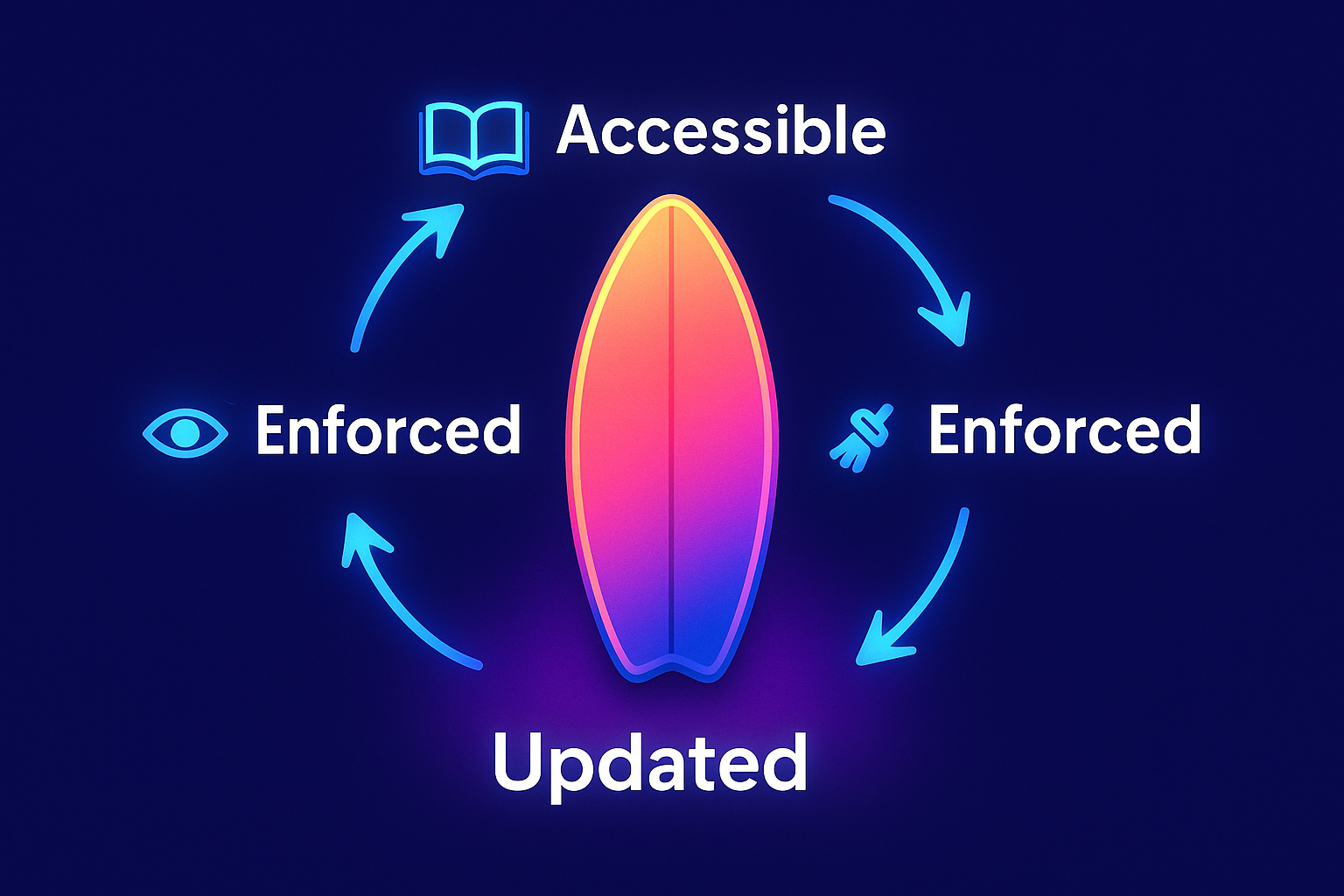
Remember that creating the document is only the first step. To make your Rules of Engagement truly effective:
- Make it accessible to everyone in your sales organization
- Store it in an easily accessible location
- Consider creating both comprehensive and quick-reference versions
- Reference it regularly in team meetings and discussions
- Use it to onboard new team members
- Reference it when resolving disputes
- Incorporate it into training programs
- Lead by example in following the documented processes
- Have leadership demonstrably use and refer to the document
- Hold team members accountable to following established processes
- Iterate and improve based on feedback and changing needs
- Collect feedback on unclear or problematic sections
- Update as your organization and processes evolve
Your Rules of Engagement document will become an invaluable resource that reduces confusion, prevents conflicts, and helps your entire sales organization operate more efficiently and effectively.